Perge Ancient City is only about 20 minutes by car from the center of Antalya. It is easy to reach: you follow the Antalya-Manavgat road and turn toward the Perge junction. Entrance is available with the Museum Pass, but it is still worth checking the opening and closing hours before you go.
For a site so close to Antalya, Perge is one of the most complete and rewarding ancient cities you can visit. In a short time, you find yourself walking through the remains of a remarkably well-planned Roman city. It is the kind of place that deserves more than one visit.
During my last visit, the theatre was closed because of restoration work. Apart from that, the site was quiet because of the cold weather. Only a few visitors were walking around. Among them, the most charming group was a German family from Cologne: a father and his two children, enjoying this beautiful Roman city with genuine curiosity.
Perge was one of the important cities of Roman Pamphylia. At one point, it even served as the capital of the region. That role is still visible in the scale and order of the ruins. This was not a small provincial town. Perge was a prestigious urban center, designed to impress.
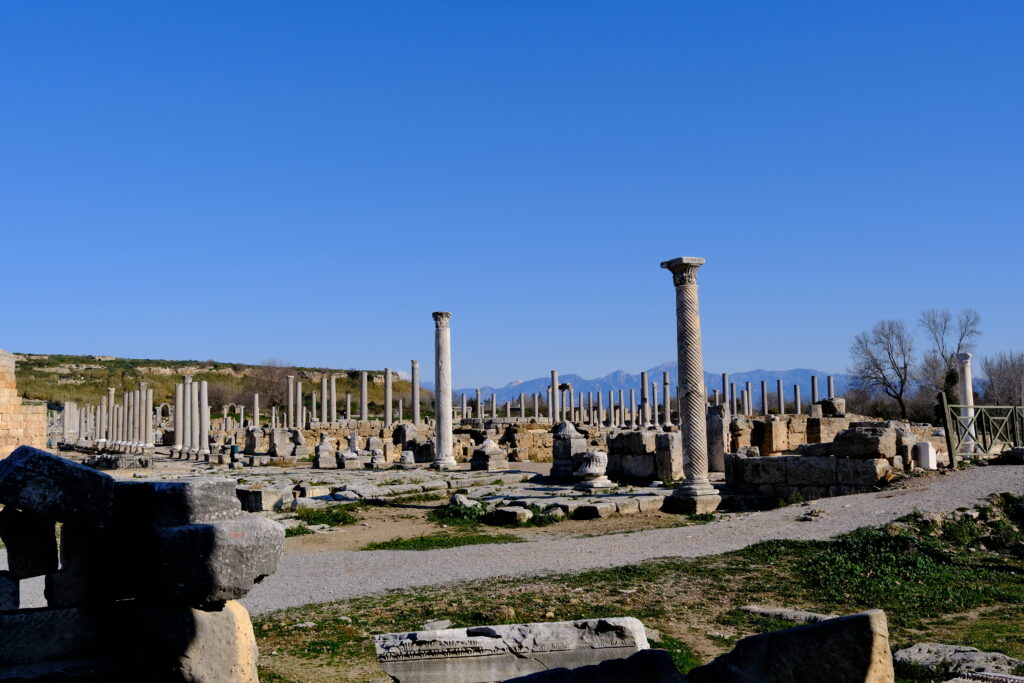
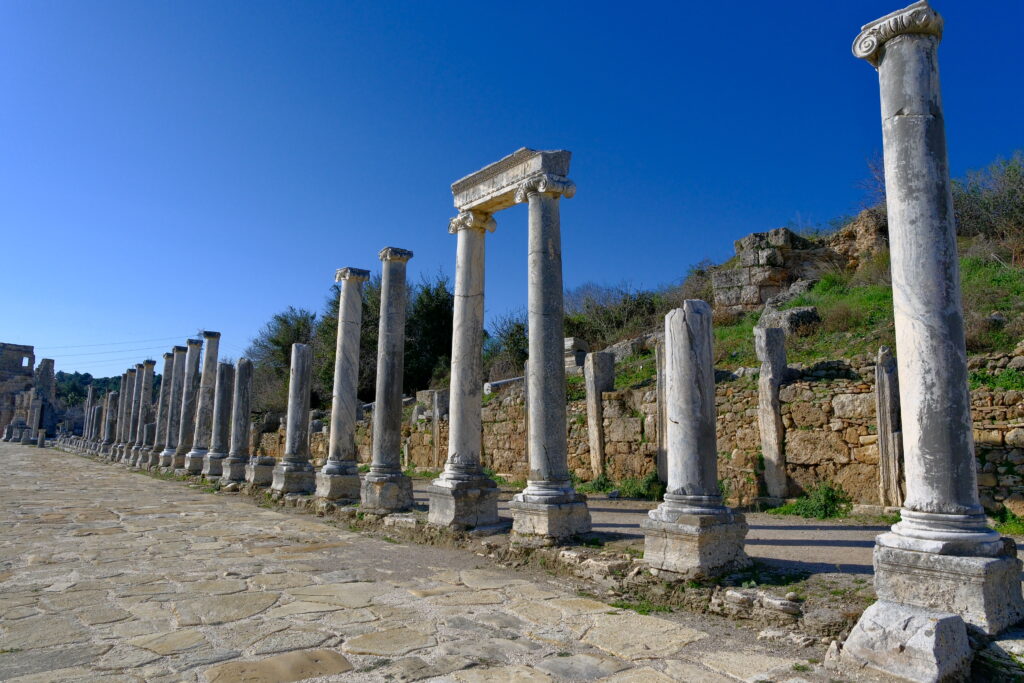
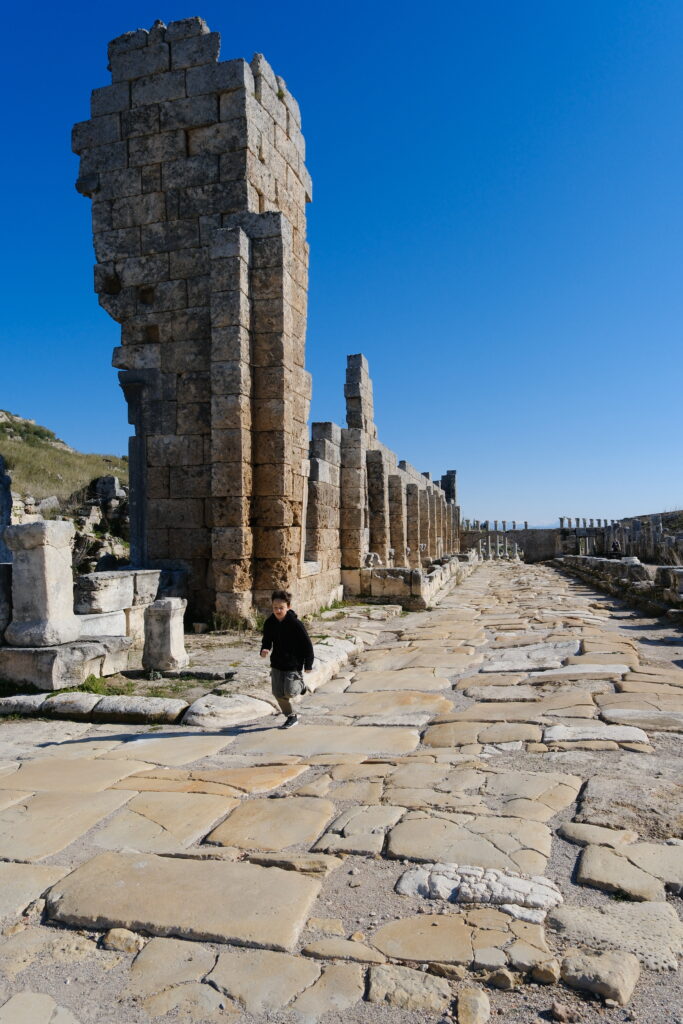
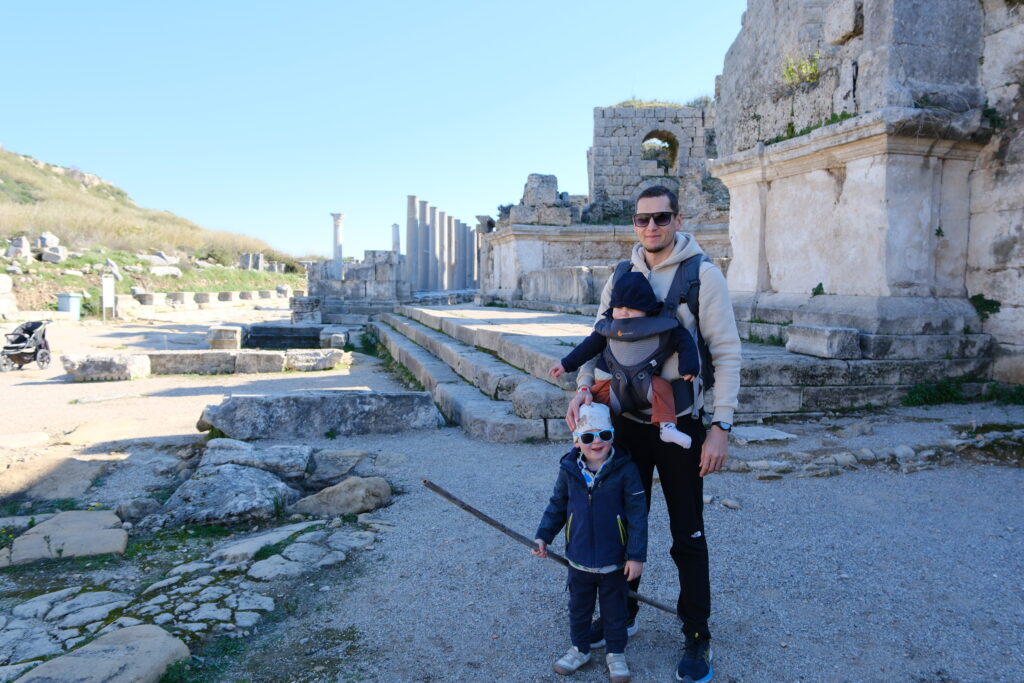
Walking Through a Roman City
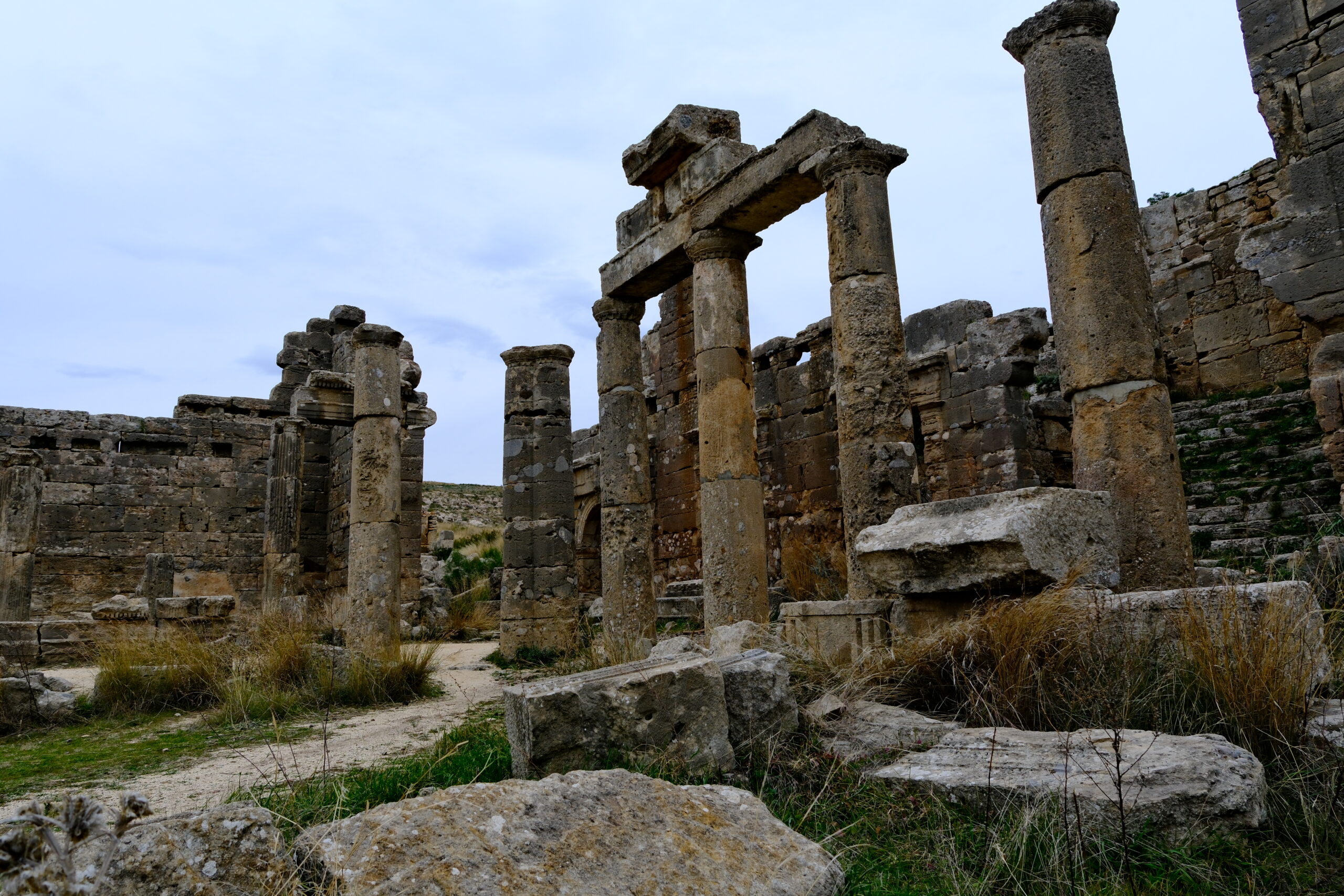
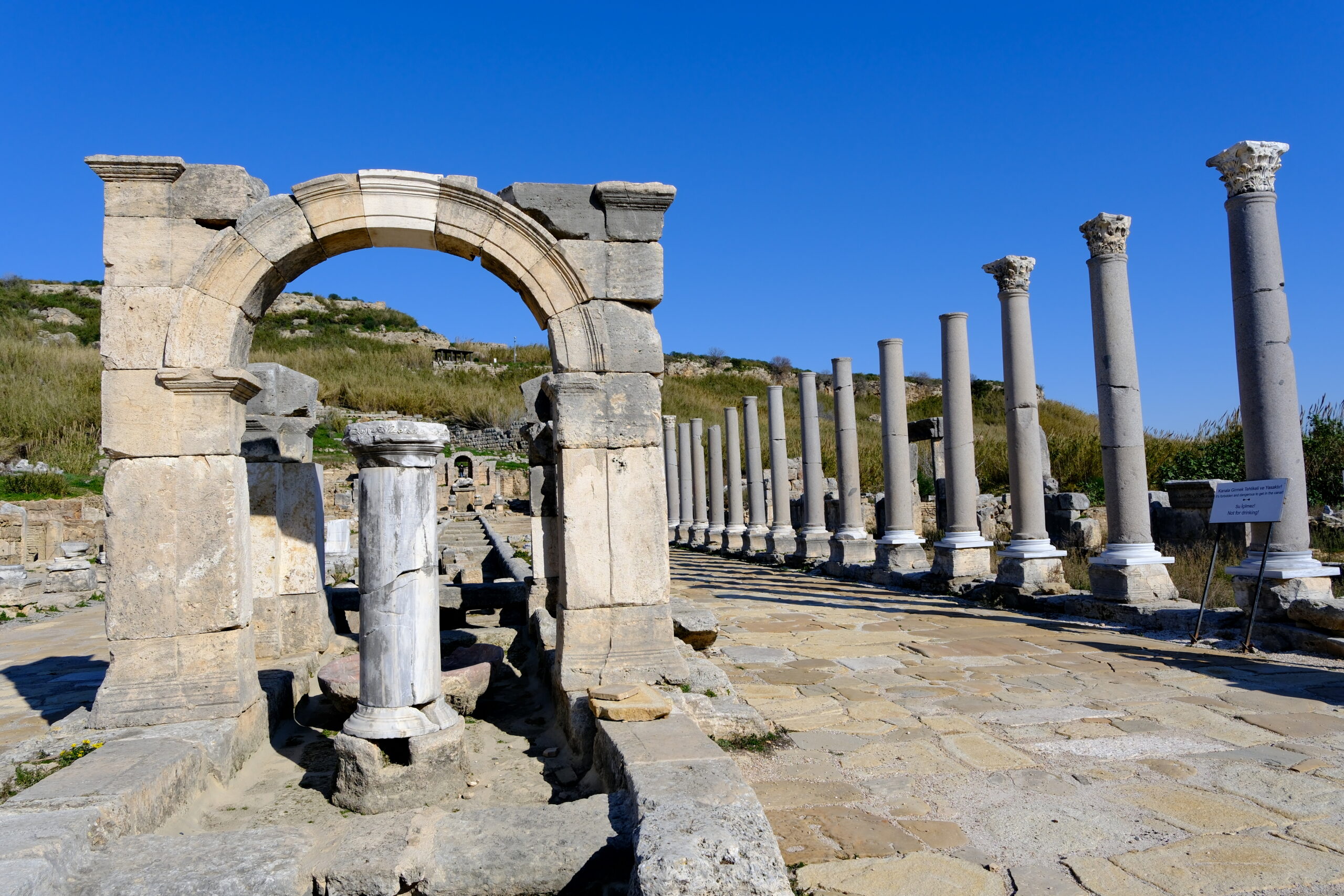
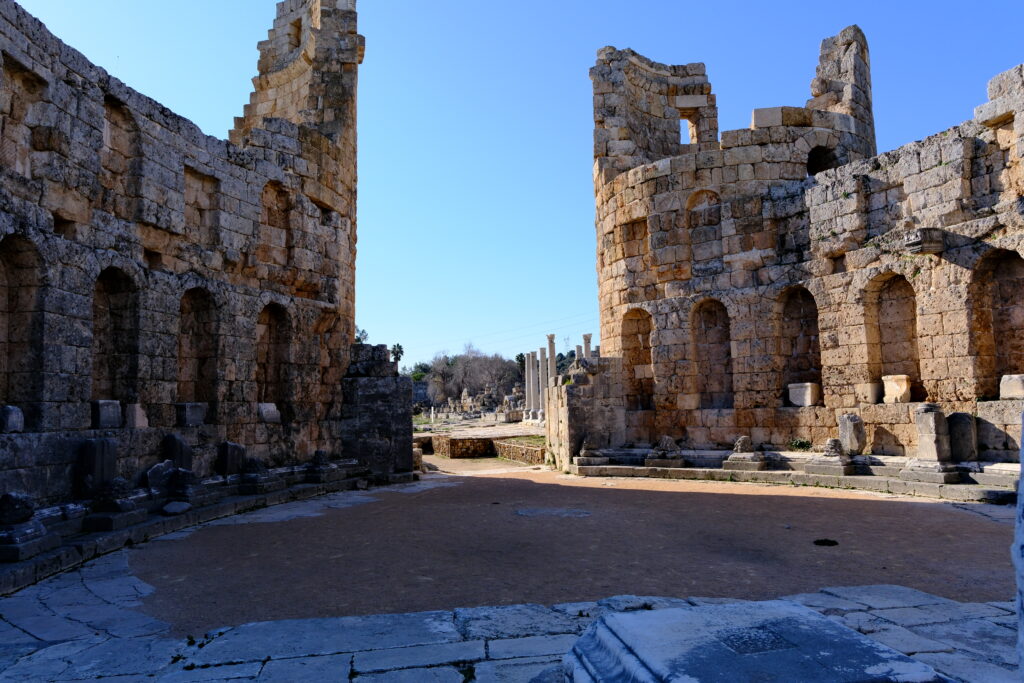
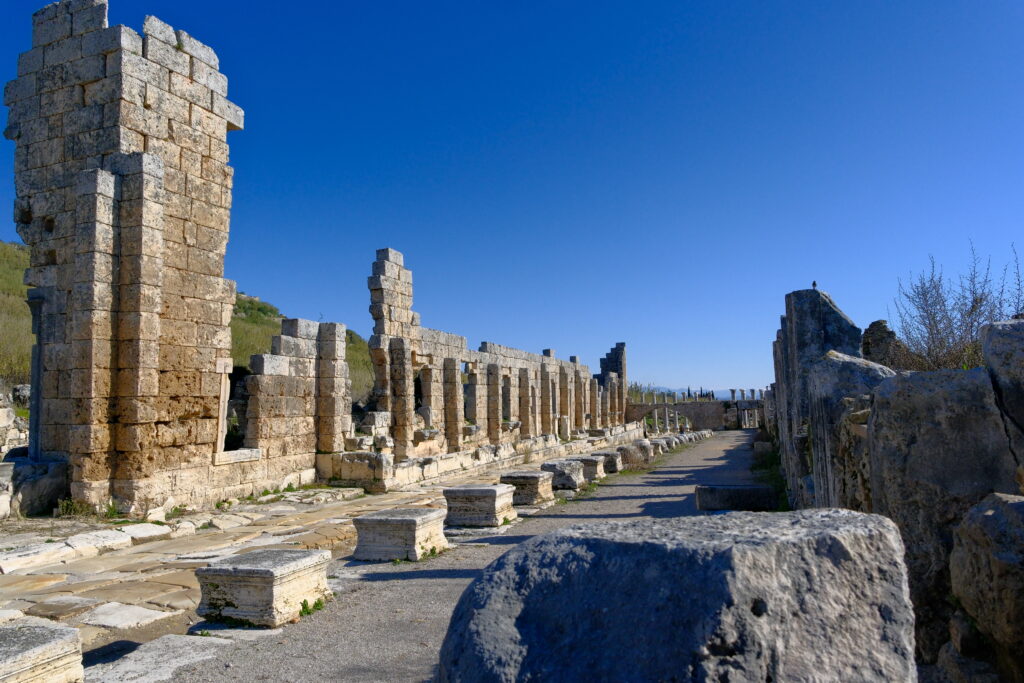
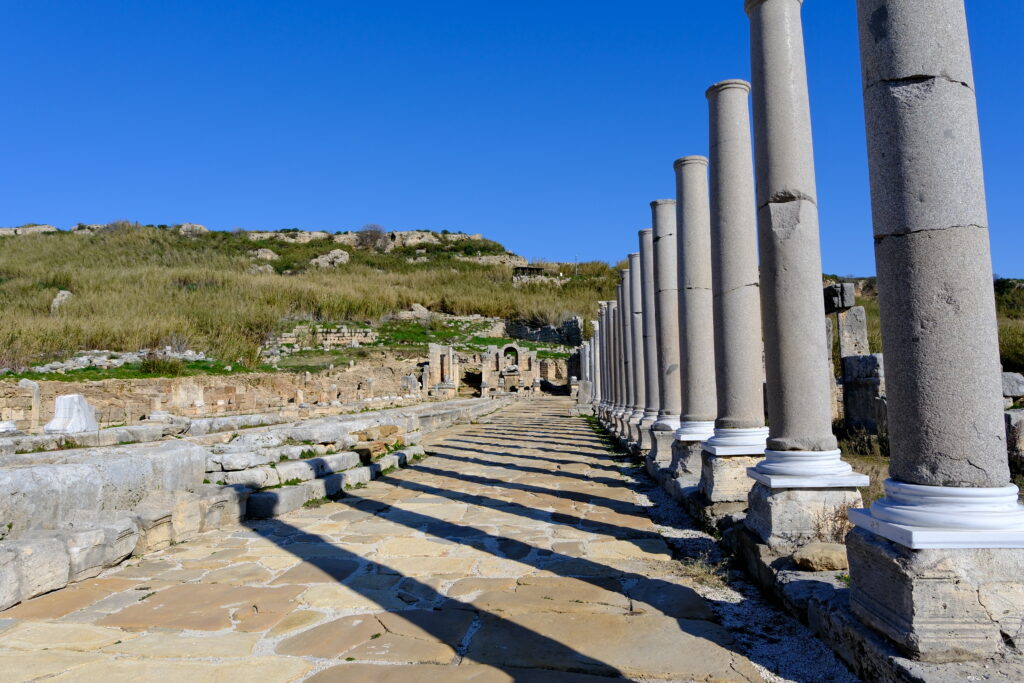
As you walk along the colonnaded street and through the agora, you immediately feel the size of the city. The monumental gate, baths, stadium, theatre and public spaces all speak of a planned and ambitious urban life.
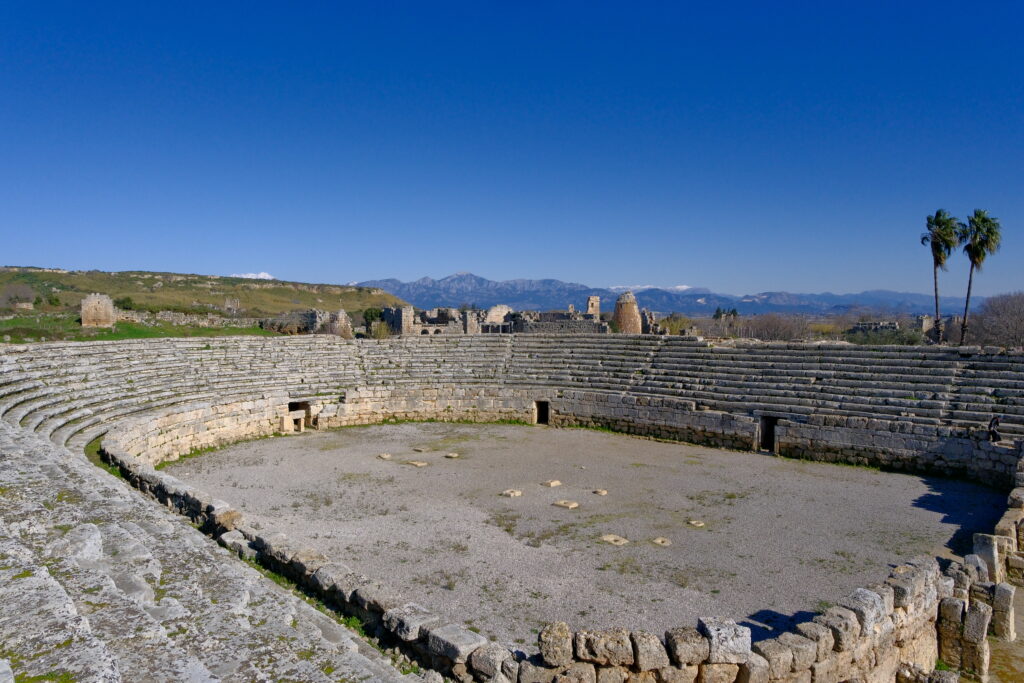
The theatre, built in a Hellenistic-Roman style, had a capacity of around 15,000 people. The stadium is also well preserved and could hold about 12,000 spectators. Even today, standing on the upper rows of the stadium gives you a strong sense of the city’s scale and its place in the surrounding landscape.
Many important archaeological finds were discovered in Perge. Most of them are normally displayed in the Antalya Archaeology Museum, which has been undergoing renovation. Among the most significant works from Perge are the statue of Emperor Caracalla and the Iphigenia mosaic.
The Iphigenia story connects Perge to the world of Greek myth. Before setting out for Troy, Agamemnon sacrifices his daughter Iphigenia to the goddess Artemis so that the winds will rise and his great army can sail. The fact that such a subject appears in Perge tells us something important: this was a city with a cultural imagination wide enough to reach the world of Troy.
Perge and the Wealth of Rome
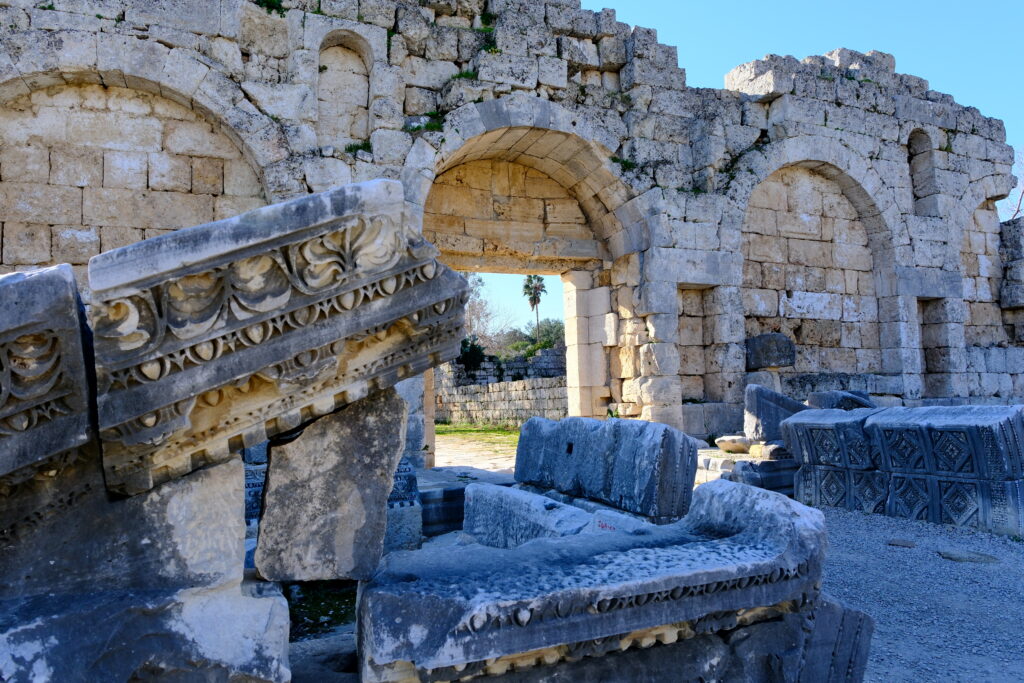
The aqueducts, main streets and public buildings connected to Perge show how magnificent and carefully planned the city was. It was not a forgotten corner of the empire. It was one of Rome’s elegant showcase cities in Pamphylia.
During the reign of Hadrian in the second century CE, the city’s visual character began to change. In the third century, under the Severan dynasty and Emperor Caracalla, nymphaea, monuments and statues honoring the emperors were added to the urban fabric.
In other words, Perge received its share of the prosperity of the Pax Romana. The city’s stones still carry that confidence: order, wealth, imperial presence and civic pride.
Saint Paul and Early Christianity in Perge
Perge also has an important connection with early Christianity. It was one of the places where Saint Paul entered Anatolia after Cyprus. According to the tradition, Paul preached here around 46-48 CE and brought the Christian message to the people of Perge.
For this reason, Perge is remembered as one of the starting points of Paul’s route in Anatolia. It was among the early stops of Christianity in this region, long before the religion became an imperial force.
Paul was born in Tarsus and died in Rome. For many, he is the most important figure in Christianity after Saint Peter, because Paul was the great carrier of the faith across the Roman world. Today, both Peter and Paul are remembered in Rome, each associated with a major basilica. Peter’s basilica stands beside the Vatican, while Paul’s is located south of the city center.
I must say that I found the Basilica of Saint Paul outside the walls even more impressive in some ways. Perhaps I also felt a kind of closeness to this man from Anatolia, someone who crossed these lands step by step and carried his message across the Mediterranean.
Why Perge Deserves a Visit
If you are in Antalya, Perge should not be treated as a minor stop. Walk along the colonnaded street. Spend time in the stadium. Climb to the upper rows and look back at the city and the landscape around it. In that view, you can still sense Rome, Pamphylia and the early traces of Christianity in Anatolia.
Perge is close, accessible and deeply layered. It is a place where architecture, mythology, Roman power and Christian memory meet in a single landscape. For anyone interested in ancient cities, it is one of Antalya’s most rewarding cultural visits.
Photos: Author’s archive