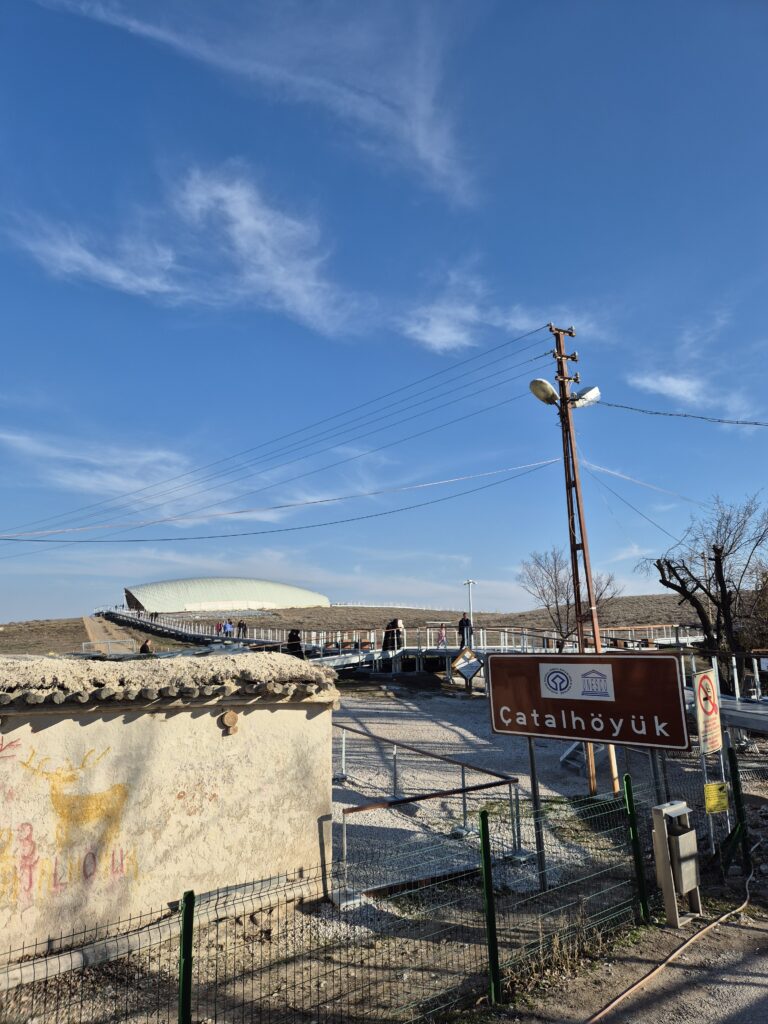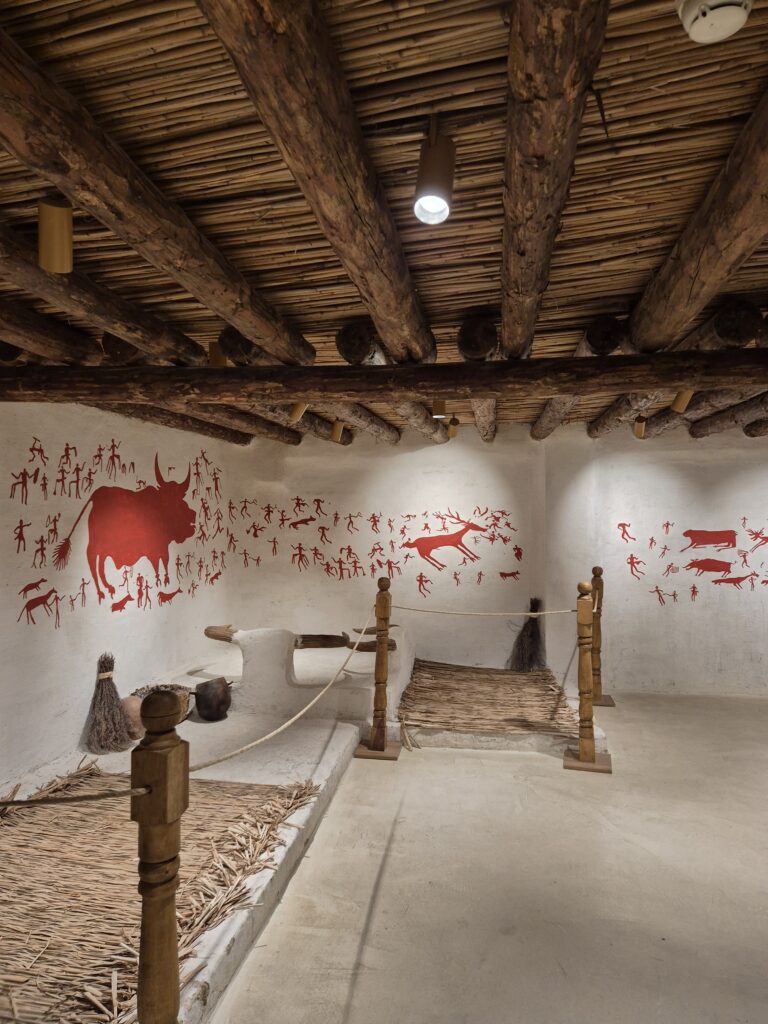
Çatalhöyük is located about 45 kilometers from the center of Konya, roughly a 45-50 minute drive away. The road is easy and completely flat. Entry is available with a Museum Pass, and it is worth paying attention to the opening and closing hours. I stayed one night in Konya just to see this place, and it was absolutely worth it. I would recommend including Çatalhöyük in any travel plan around Nevşehir and Konya.
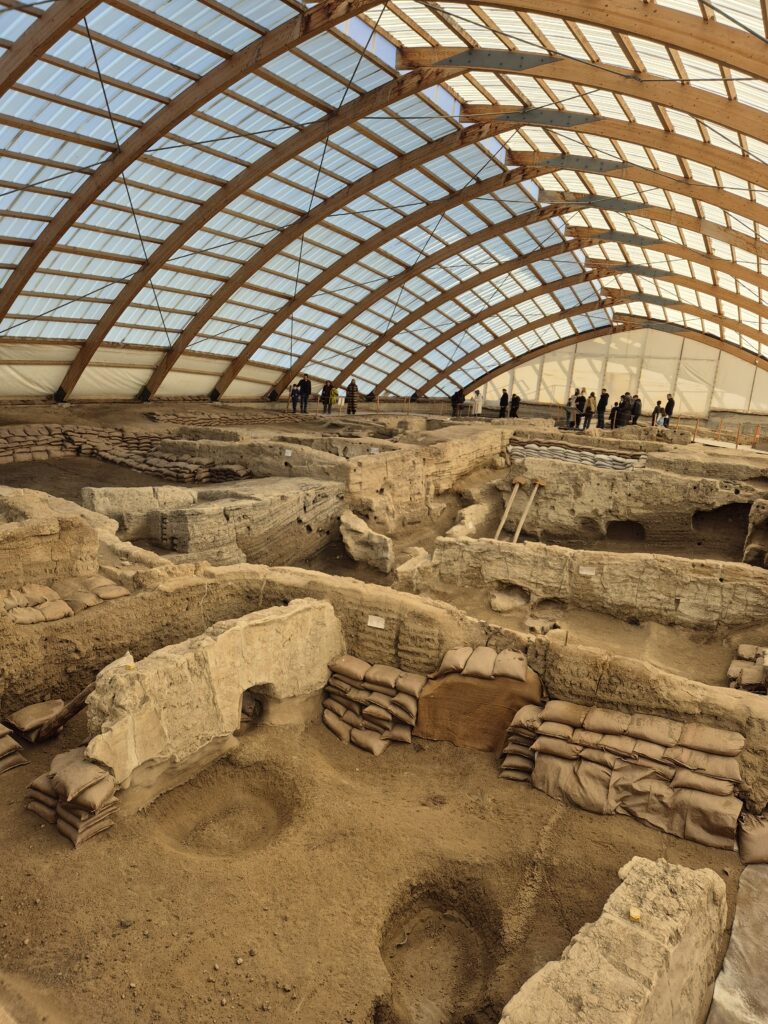
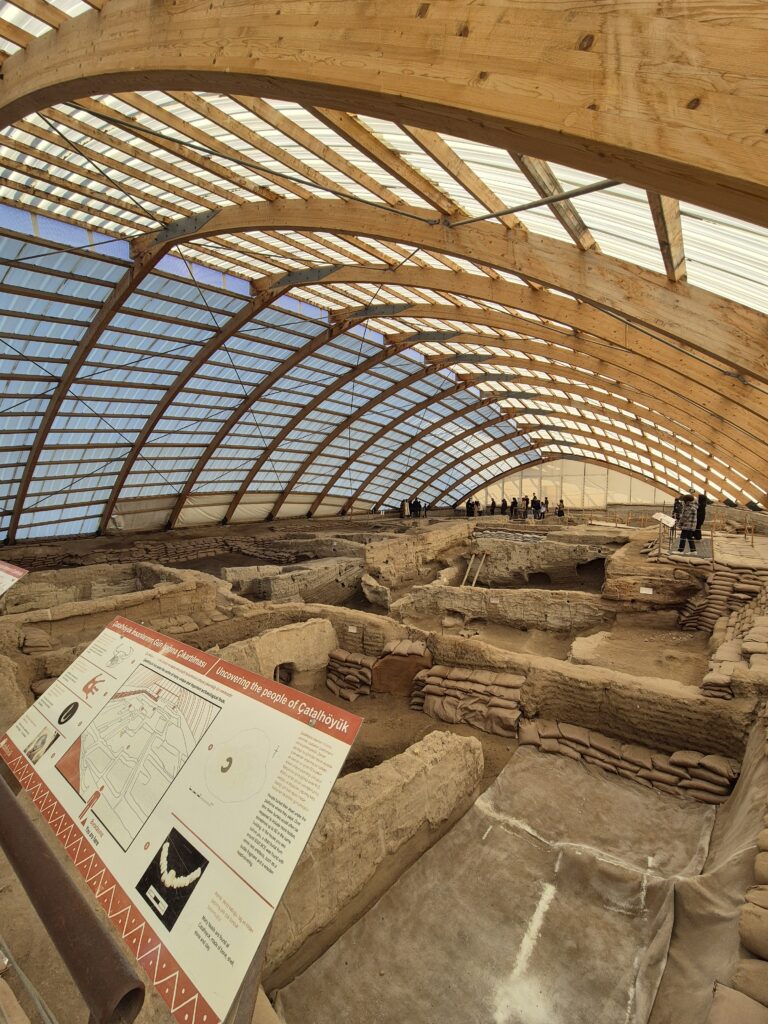
To be honest, this is where I saw one of the best and most modern museums I have visited in Turkey. It is beautifully designed, enriched with digital equipment, and offers a deep experience. Çatalhöyük is one of the most important Neolithic centers in the world and dates back to the 7000s BC.
We know that humanity’s transition to settled life did not happen all at once. This process unfolded gradually, within a society without hierarchical classes. At Çatalhöyük, you can observe the social organization, division of labor, and rituals of this transition into settled life in a very clear way.

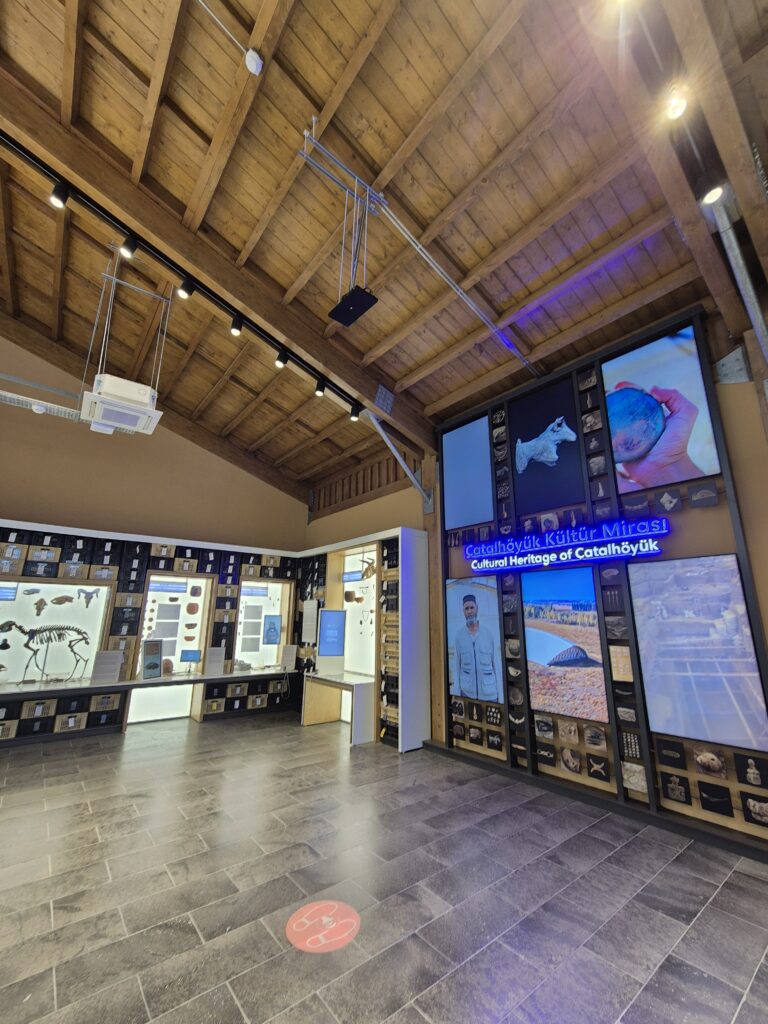
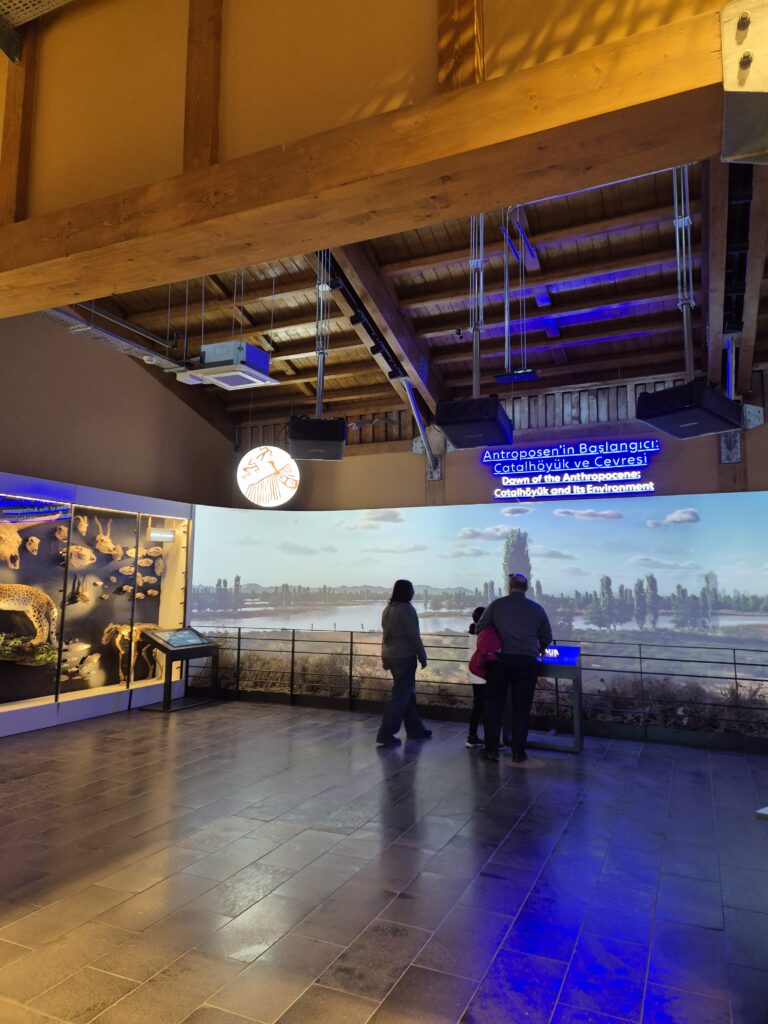
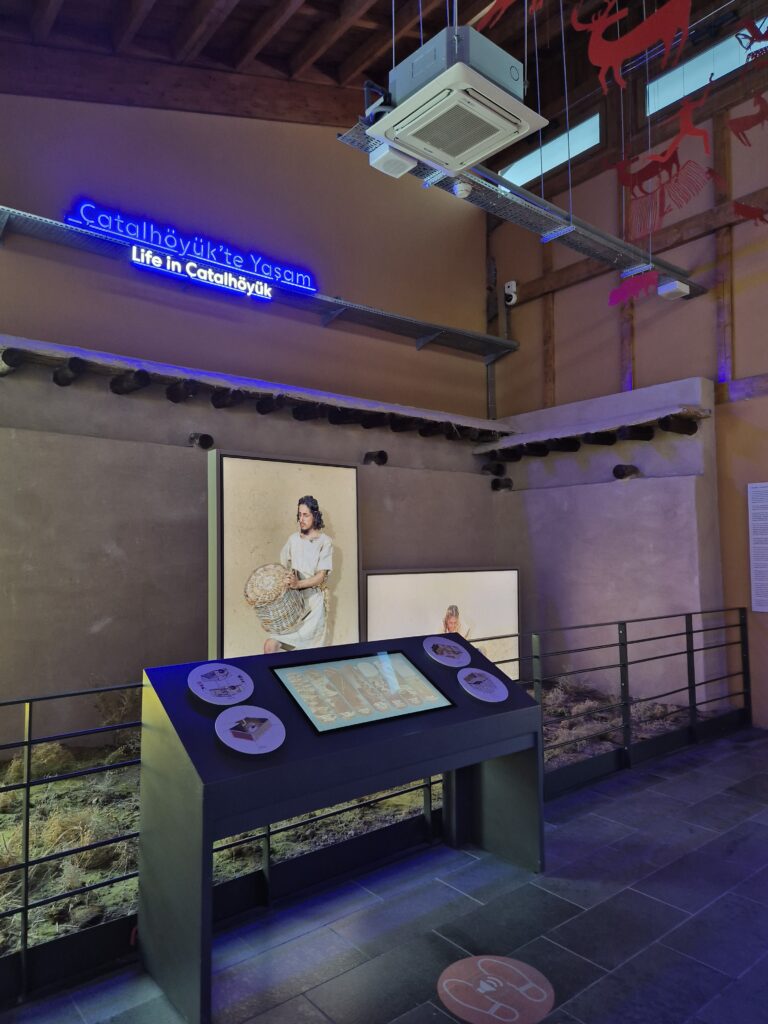
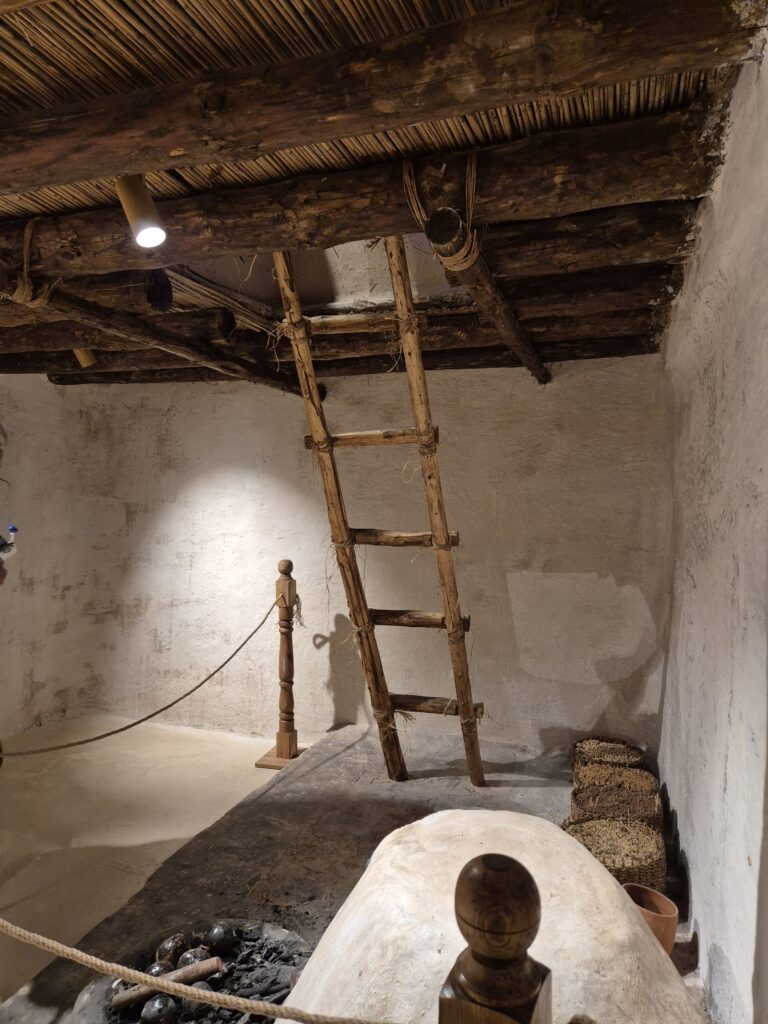
The domestic architecture is tightly packed; the houses stand side by side, almost wall to wall. Entry into the houses was through an opening in the roof; they had no doors. The walls contain geometric patterns and animal motifs. For example, the image of the Anatolian leopard can be seen on the walls of some houses.
They buried their dead beneath the homes they lived in, and they cared for the disabled and the elderly. As you walk through the museum, you can begin to imagine the religious and ritual patterns of that period. Since Çatalhöyük has been on the UNESCO World Heritage List since 2012, it receives a considerable number of visitors.
Inside the rooms of the houses, hearths and platforms immediately stand out, allowing you to picture daily life there. The walls were plastered and decorated with various motifs: hunting and dancing scenes, geometric patterns, and human and animal figures. The rooms contained mudbrick platforms, and the dead, whose bodies had been dried in the sun, were buried inside these platforms.
Professor Ekrem Akurgal described Çatalhöyük as “the first brilliant civilization on earth” and expressed his admiration for the works of art created by the people of that period. Among the houses, there were shrine rooms, and in these spaces bull heads or horns were embedded. This may suggest that the belief in bull worship began together with agriculture.
For ancient belief rituals and cults, Çatalhöyük is an extraordinary place. In my view, it is among the three most important cultural heritage sites in Turkey. Today, Göbeklitepe and Karahantepe in Urfa, through the Taş Tepeler Project, have become popular sites emphasizing Anatolia’s Neolithic revolution, and they have captured public attention. For that reason, I think Çatalhöyük and its contribution to the Neolithic period should be read and understood more carefully.