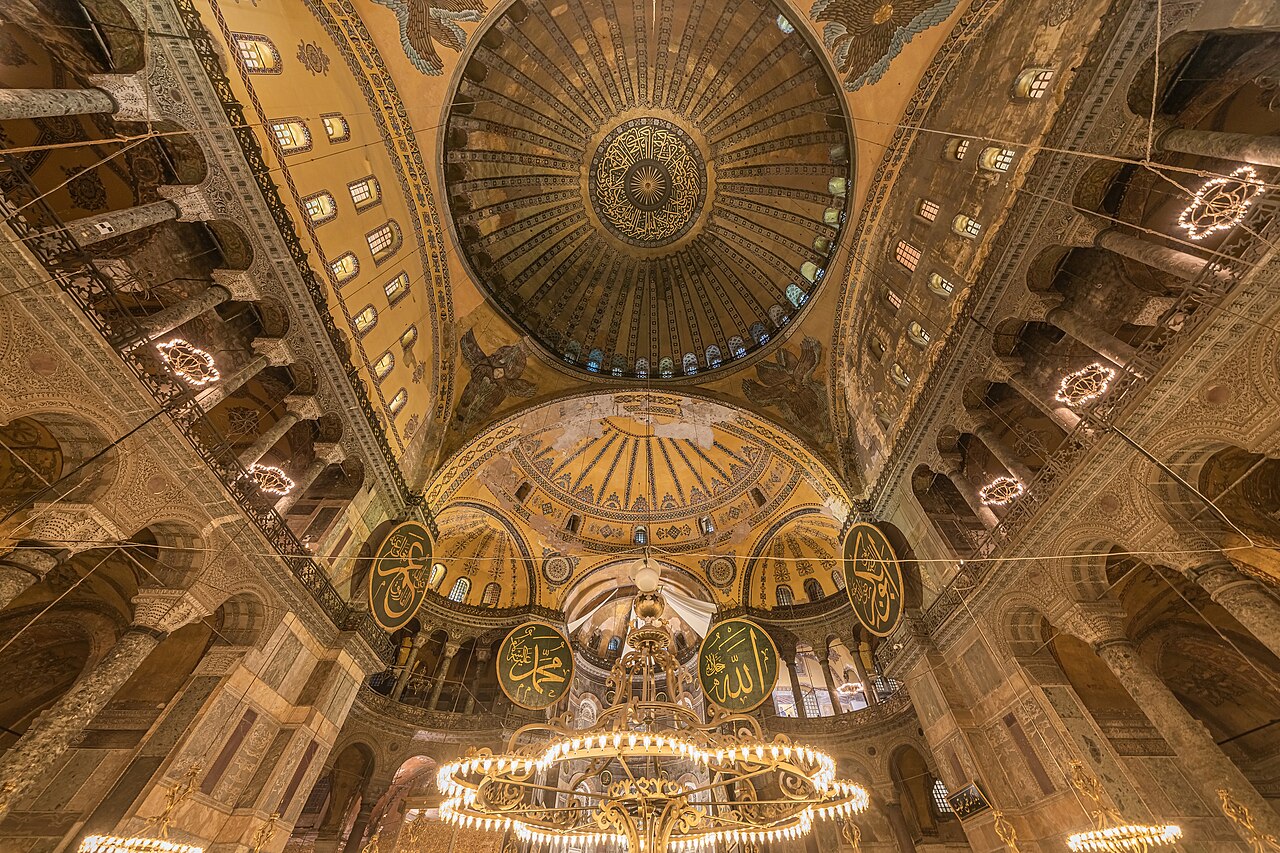
Architecture is not made of stone alone; sometimes, it also tells us how a society sees the world. A deeper gaze into sacred spaces will enable us to see further.
When we enter a building, we often begin by looking at its walls, columns, dome, or ornamentation. If it is large, we are impressed. If it is old, we take a photograph. If it is famous, we linger a little longer in front of it.
But perhaps there is a deeper question worth asking:
Are we really entering a building—or entering a society’s way of understanding the world?
A temple, church, mosque, or ancient theatre is more than an architectural structure. Of course, it is made of stone, arches, columns, domes, and walls. Yet none of these elements are there by chance. A building’s entrance, orientation, height, plan, light, and even the path we follow inside it all have something to say.
That is why asking only “When was it built?” or “Who built it?” may not be enough. Other questions begin to emerge—questions that deepen both our curiosity and our perspective:
Why was this building designed this way?
What did people hope to feel here?
What kind of world did this space convey to the people of its time?
Architectural structures are not simply built to provide shelter or a place of worship. Architecture can express power, make the sacred visible, bring a community together, or help people feel their place within the universe.
This is exactly what I want to explore in this article. My aim is not simply to describe the history, plan, or architectural features of these buildings. Alongside the question “When was it built?”, I would also like to ask: “Why was it built this way?”
This is, in a way, what I try to do in my writings as well: to look at a sculpture, temple, church, or mosque not only as it appears on the surface, but together with the ideas, beliefs, and people behind it. A small doorway, a grand dome, a beam of light filtering inside, or the orientation of a building can reveal more than architectural information. They can offer clues about how people of that period understood the world.
So rather than treating this as a conventional architectural-history text, I would like to see it as a shared act of reading and thinking. Perhaps the real value of buildings lies not in giving us ready-made answers, but in encouraging us to ask better questions.
Is a Building Ever Just a Building?
At first glance, a temple may seem like a sacred space built for a particular faith. A church is associated with Christian worship, a mosque with Islamic worship, and an ancient theatre with performance. All of this is true—but the meaning of these structures is not limited to their function.
The way a building is constructed also reveals what a society values. Tall columns are not merely structural supports; they also create a sense of grandeur. Domes do more than cover a roof: they may evoke the sky, eternity, or a divine order. A narrow entrance or monumental portal is not simply an architectural choice; it can make the transition into a sacred space feel more powerful.
A portal creates a threshold between the outside world and the interior. Passing through it means more than entering a building—it means stepping into a different field of meaning. Light, too, is more than a practical source of illumination; it can make the sacred feel present.
Architecture, then, is as much a form of expression as it is a technical discipline. It is a silent language built with stone, light, direction, and space. When we enter a structure, we begin to read that language.
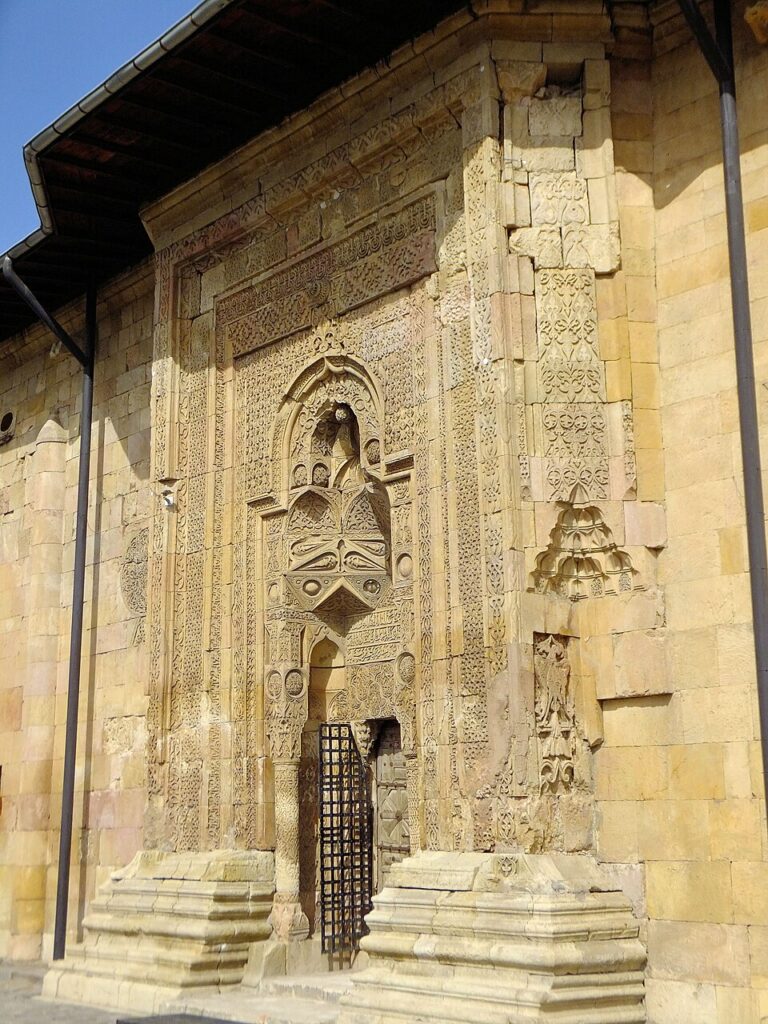
The Temple: A Threshold Between Humanity and the Divine
In the ancient world, temples were not simply places of worship. Today, when we look at a temple, we may notice its columns, stonework, or how remarkably intact it remains. But for people of the time, a temple meant much more.
It was a special place representing the presence of a god in the human world. People did not approach it merely to enter a structure, but to come into contact with the sacred.
Could this be why so many temples were built on elevated ground, on acropolises, or at the most prominent points of a city?
I do not think this was only an architectural decision. Climbing upward physically distances a person from everyday life as well. You leave behind the crowds, noise, and complexity of the city. With every step, you do not simply move closer to the building—you move toward a different realm of meaning.
This sense of transition is one of the most powerful aspects of sacred spaces. The sacred gains meaning by being set apart from the ordinary. Approaching a temple is therefore not just approaching a building; it is leaving everyday life behind and entering a space considered more special and meaningful.
Ancient Greek temples make this especially clear. Their columns, pediments, sculptures, and exterior appearance were not designed simply to look beautiful. They were signs that made divine power, order, and majesty visible.
In other words, a temple does not merely tell people about a god; it tries to make them feel that god’s presence.
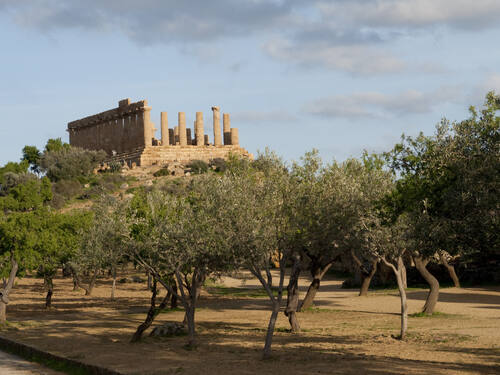
Just as we read the symbols held by a god in a sculpture, we can also read a god’s space in a temple. While a sculpture tells us who that god is, the temple helps us understand how one is meant to approach the divine.
Perhaps this is why temples help us understand how past societies related to the sacred. To understand a society’s gods, we need to look not only at its myths, but also at the spaces it built for them.
Why Do We Face East in a Church?
When we enter a church, we often first notice the high ceilings, long nave, icons, frescoes, or the light filtering through stained-glass windows. But alongside what we see, the direction we face also matters.
In Christian architecture, orientation carries great significance. The east, in particular, has a special meaning in many churches. This is not simply a geographical preference. East is where the sun rises; it is associated with light, new beginnings, hope, and resurrection.
This is why the altar in many churches is positioned toward the east. A worshipper is not simply standing somewhere inside the building; their body, gaze, and attention are all directed toward a particular point.
Sacred spaces do not merely contain us—they guide us.
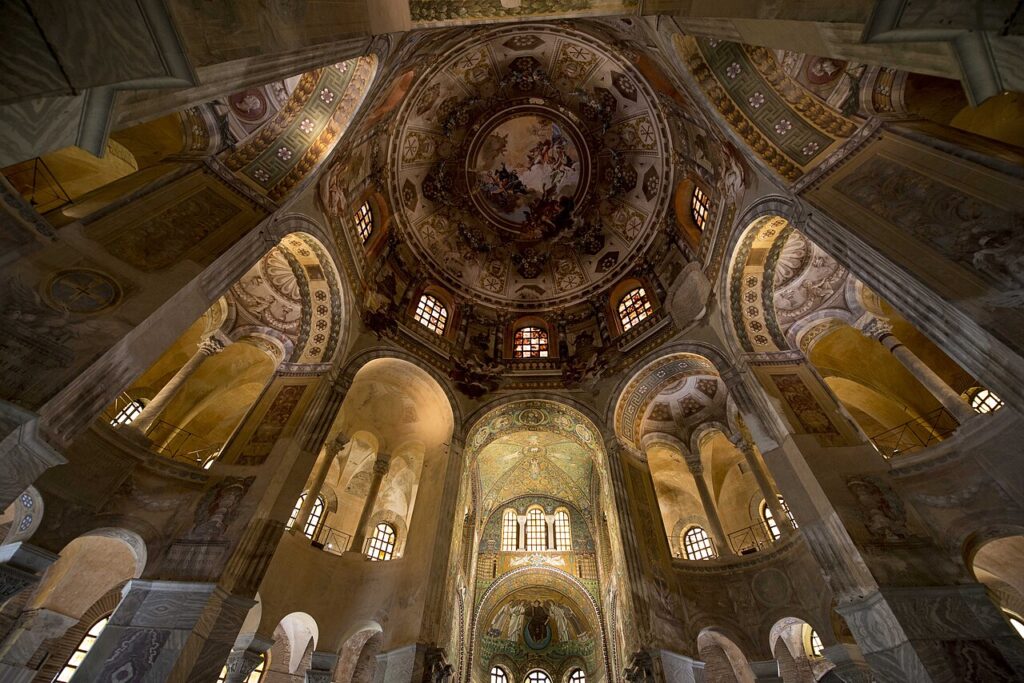
Walking from the entrance toward the altar is not only moving through a physical space. Step by step, along the long nave, one approaches a point regarded as more sacred. This movement itself carries symbolic meaning.
High ceilings, vertically rising architecture, light passing through stained glass, icons, frescoes, and mosaics all strengthen this experience. Together, these elements transform a church from a place of worship into a space where a person feels immersed in a different atmosphere.
The use of light is particularly striking in Byzantine churches. Gold-ground mosaics, illuminated by lamps and daylight, do not simply function as wall decoration. They create an almost otherworldly feeling within the space. Light does more than brighten the interior; it becomes an element that makes the sacred perceptible.
So when we look at a church, we should not see only its plan, dome, or decoration. A church is a space where belief is expressed through stone, light, direction, and image.
Put differently, a church does not only say, “This is where people worship.” Through architecture, it also responds to questions such as: “How should one approach the sacred? Where should one look? What should one turn toward?”
Why Is the Dome of a Mosque So Powerful?
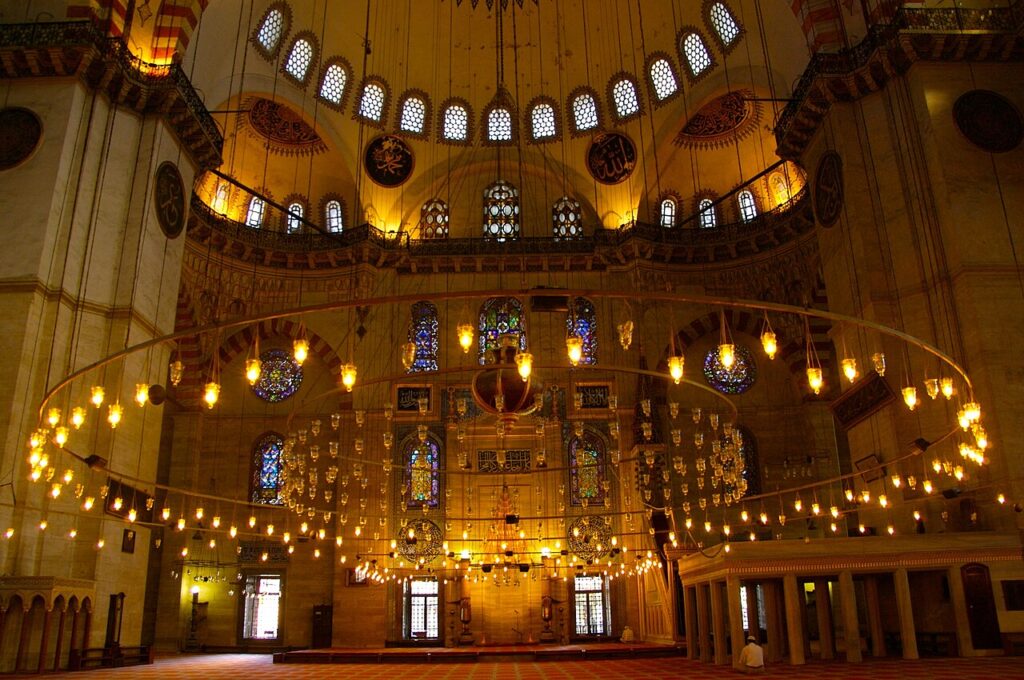
When we enter a mosque, one of the first things that often draws our attention is the dome. In Ottoman mosques especially, the dome feels almost like the building’s central idea. When we look upward in the Süleymaniye Mosque, Selimiye Mosque, or Sultanahmet Mosque, we are not simply looking at an architectural covering. We are looking at a form that gathers the whole meaning of the space beneath it.
Why, then, is the dome so powerful?
There is, of course, a technical answer. A dome allows a wide interior to be covered, enabling the congregation to gather in one unified space. But beyond its structural function, the dome also evokes the vastness of the sky.
When you look up at a dome inside a mosque, its broad, rounded form makes you think upward. The space suddenly stops being only horizontal. It seems to direct the person toward something greater, more expansive, and infinite. In this sense, the dome is not merely an element that covers the building; it is an architectural language that conveys ideas of eternity, unity, and divine order.
Direction is just as important in a mosque as the dome. The congregation gathers in the same space and turns toward the same direction: the qibla. This orientation is not simply a physical posture. It is also a way of participating in a shared world of meaning. Different people stand in the same rows, facing the same direction in prayer. The space itself is arranged to support this sense of unity.
The position of the mihrab, the location of the minbar, the central effect of the dome, calligraphy, and geometric ornament all form parts of this whole. They do not exist merely to look beautiful individually; they work together to create the meaning of the space.
One particularly striking aspect is the emphasis on writing, geometry, repetition, and rhythm rather than figurative imagery. In a mosque, meaning is often created not through human or animal figures, but through calligraphy, vegetal motifs, geometric order, and the balance of the space itself.
This shows us something important: a belief system can express itself not only through images, but also through emptiness, direction, proportion, and writing.
When we enter a mosque, then, we do not simply enter a building for worship. We step into a space where ideas of order, unity, orientation, and infinity are made visible through architecture. Looking upward toward a mosque’s dome, a person may feel part of something larger than themselves.
Why Do Ancient Theatres Share Similar Plans?
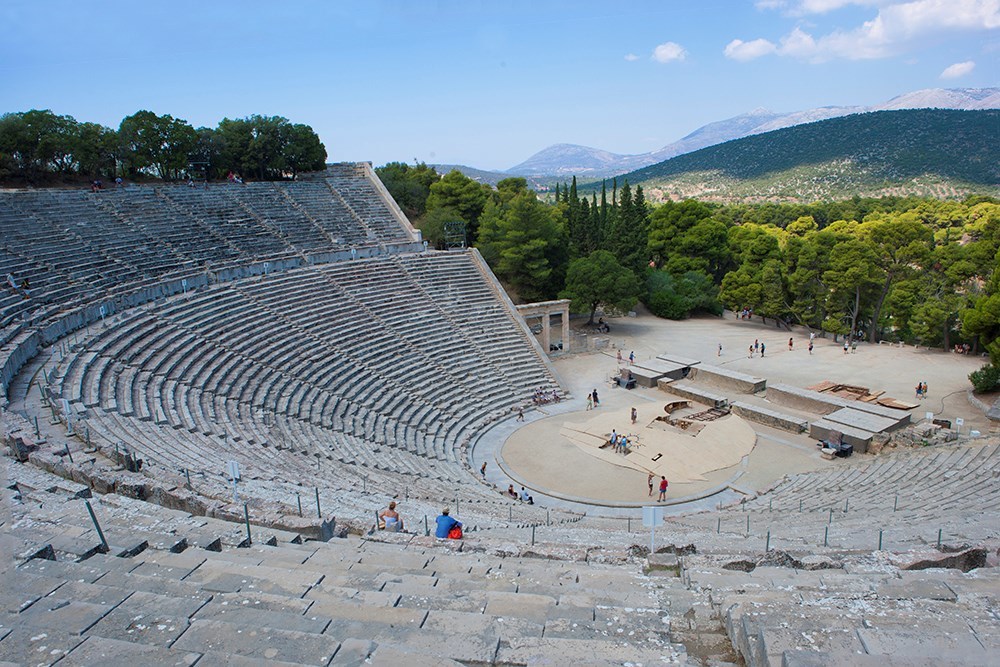
When we look at an ancient theatre, we often encounter a familiar arrangement: semicircular rows of seating rising upward, an orchestra at the centre, a stage building, and a plan usually placed along a natural slope.
At first glance, this may seem like a purely functional choice. Everyone needs to see the stage, hear the actors, and watch the performance as part of a large crowd. But explaining ancient theatres only through these technical features leaves something out.
In the ancient world, theatre was not merely a place to watch plays. It was also a space where society gathered, shared its stories, and encountered its fears, beliefs, and contradictions on stage. People did not go to the theatre only for entertainment; they also watched themselves, their society, and the order they believed in.
The relationship these theatres established with nature is especially remarkable, particularly in Greek examples. They were often built against a hillside, using the natural slope of the terrain. This made it easier for audiences to see the stage, while also allowing the theatre to be experienced together with its surroundings.
It is no coincidence that theatres in port cities or settlements near the sea were often placed where they opened onto a view. When you sit in an ancient theatre today and look toward the stage, you may see the sea, mountains, or a wide cityscape behind it. This suggests that ancient people did not think of theatre as an enclosed performance space alone, but as a place experienced together with nature and the city. The view, in other words, was part of the performance.
This is why the theatre’s plan matters. The semicircular seating directs everyone toward the stage. The central area is both where actors and the chorus perform and where the audience’s attention gathers. Everyone looks toward the same place, watches the same story, and confronts the same questions.
In tragedies, people watched stories about gods, fate, guilt, punishment, family, and power. In comedies, everyday life, politics, and social criticism came to the stage. From this perspective, ancient theatres were not only venues for performance; they were places where society confronted itself.
To me, the most interesting point is this: sometimes, looking at the stage is not enough to understand a theatre. We also need to look at the audience—or even imagine the landscape the audience was looking at.
Theatre gains meaning not only through the story being told, but through the society listening to it and the environment surrounding that society. What did those people laugh at? What made them sad? Which gods did they fear? In whose mistakes did they recognise themselves? And while watching all this, what kind of city or landscape stood behind or before them?
Once we begin asking these questions, we understand more clearly that an ancient theatre is not simply made of stone seating. Between those stones lie a society’s voice, memory, aesthetic sense, and the questions it asked of itself. Ancient theatres remain powerful because they show us not only how people watched plays in the past, but how they tried to understand themselves through stories, space, and landscape.
How Do Buildings Guide Us?
We often think that the way we move through a building is entirely our own choice. Yet spaces frequently guide us without our even noticing. In a temple, we climb steps. In a church, we move along the nave toward the altar. In a mosque, we turn toward the qibla. In a theatre, our gaze is almost inevitably drawn to the stage.
Architecture, then, is not only something we see; it also shapes the movement of our bodies. It quietly tells us where to enter, where to look, where to pause, what to approach, and sometimes even how to feel.
We experience this without consciously thinking about it. When we enter a grand mosque or cathedral, we lower our voices. Standing before a monumental structure, we feel smaller. In a museum, we walk more slowly. Sitting in an ancient theatre, we begin looking not only at the stone steps, but toward the stage and the landscape.
Who tells us to do this? Most of the time, no one. The space itself does.
Spaces are not passive places that simply contain us. On the contrary, they invite us into a particular experience. A sacred space separates us from the speed of daily life. A theatre focuses our attention on a shared story. A temple carries us upward toward a realm considered more special. A mosque makes us feel the unity created by people turning in the same direction.
These are the details that make architecture so interesting. Buildings are not simply collections of stone, domes, and arches as they appear from the outside; they are spaces that change us once we enter them.
What does this building ask a person to do? How does it make us walk? Where does it direct our gaze? Where does it make us stop? What does it make us notice?
These are questions that should be considered alongside a building’s plan.
To truly read a building is not simply to know where the stone, dome, or column is located. It is to try to understand the experience that building creates for people.
Reading Space Through the Lens of Tourist Guiding
From the perspective of tourist guiding, I do not think explaining a building is only about giving dates.
“This building was constructed in this century.”
“It belongs to this period.”
“This material was used.”
“This is its plan type.”
All of this is certainly important. A guide should know these details. But they are not always what stays with a visitor.
Years later, a visitor may not remember the exact date of a building. But they may remember how it made them feel: looking up at a dome as they entered, watching light fall across mosaics in a church, seeing the sea behind the stage of a theatre, or gradually leaving everyday life behind as they climbed toward a temple.
This, I believe, is where good guiding begins.
A guide is not simply someone who transfers information. A guide creates a bridge between what visitors see and what it means. Sometimes, they make visible a detail that everyone has looked at but no one has noticed. They explain that a door is not only a door, a dome is not only a covering, and a theatre is not only a performance venue.
When we explain why a church faces east, for example, we are not only discussing an architectural feature. We are also talking about light, resurrection, and orientation. When we describe the dome of a mosque, we are not speaking only about a form that covers a structure, but also about the feeling of infinity it can create when someone looks upward. When we talk about an ancient theatre, we think not only about the seating rows, but also about what the people sitting there laughed at, mourned, and recognised in the stories before them.
This is why explaining a building is also, in part, about explaining people.
People build structures; structures, in turn, shape people.
Buildings teach people where to look, how to move, what to consider sacred, how to take their place within a community, and how to position themselves in the world. For a tourist, a building may be a destination, a photograph, or a stop along a route.
But from the perspective of guiding, that building becomes a text—a text waiting to be read. A text made of stone, light, direction, sound, emptiness, and symbols.
For me, tourist guiding is not only about answering the question, “What does this building do?” It is about encouraging the question, “What is being told here?” One of the most valuable things we can offer visitors is not only new information, but a new way of seeing.
Conclusion: Looking at a Building, or Reading It?
It is easy to pass by a building. We can take its photograph, learn its date, find out which period it belongs to, and continue on our way. But to truly understand it, we need to slow down and look more carefully.
We need to pay attention to its entrance, orientation, light, height, emptiness, and the feeling it leaves in us. Architecture is not created merely by bringing stones together; it often carries a society’s beliefs, worldview, and sense of its own place in the world.
Perhaps, then, the most important question to ask when looking at a building is this:
“What is this structure trying to show me?”
The past does not always speak directly. But when we learn to ask the right questions, stones have a great deal to say.