


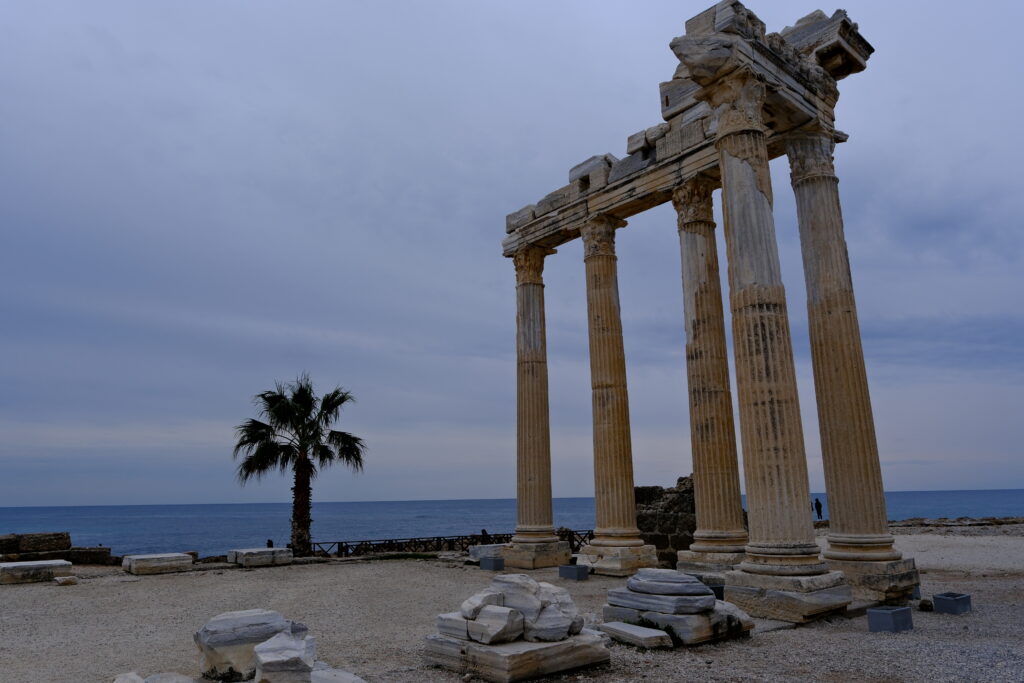
Ancient Side, Antalya
Ancient Side is a remarkable place stretching along the coast of Manavgat. It is a city I have visited from time to time since childhood, and in recent years I have tried to return once or twice a year to follow its ongoing development.
Side, a Pamphylian city, became a wealthy port settlement during the Roman period. Located about 75 kilometers from central Antalya, it can be reached in roughly 1 hour and 10 minutes by car. A Museum Pass, known locally as Müzekart, is required for entry. The site is open every day, and in summer it is one of the places where night museum visits are available. Outside the summer season, however, it is worth checking opening and closing times in advance. You can leave your car in the reasonably priced archaeological site parking area and enter from just beside it.


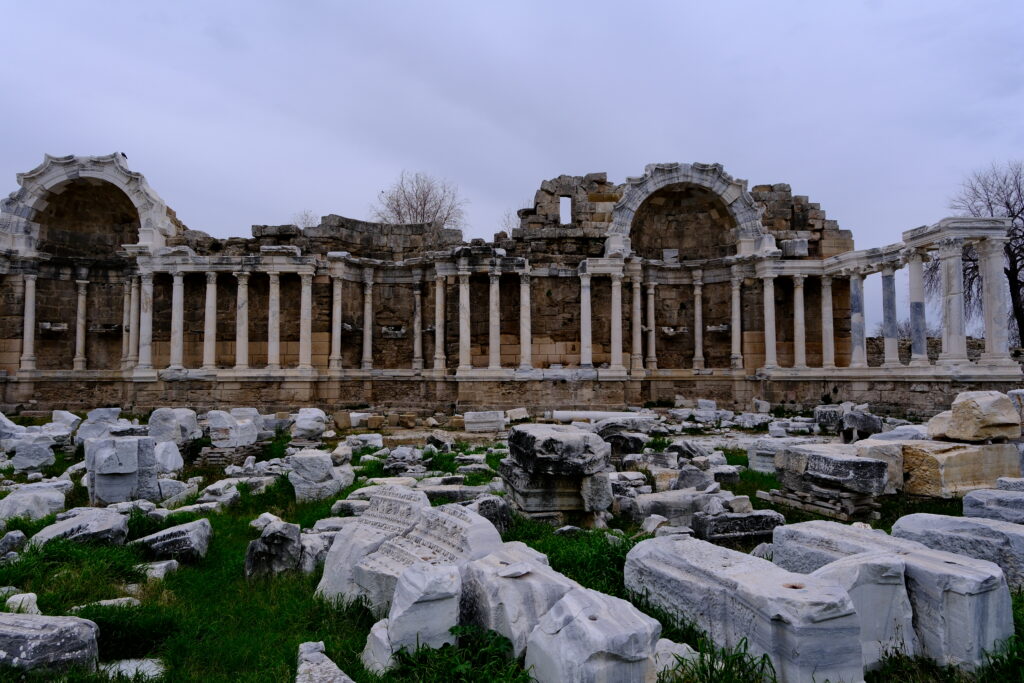
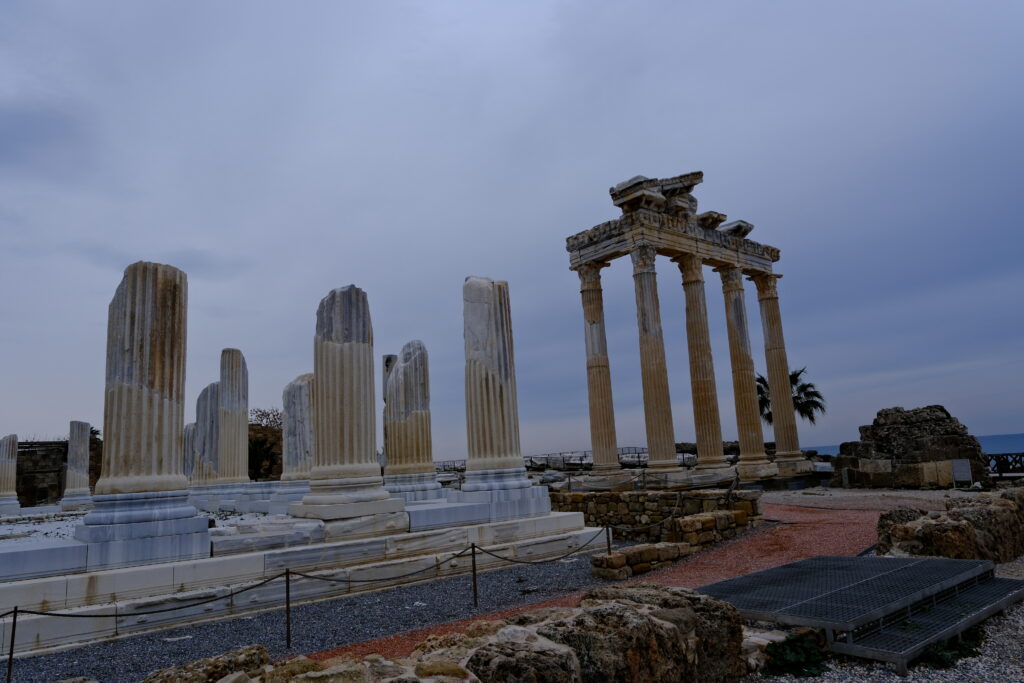
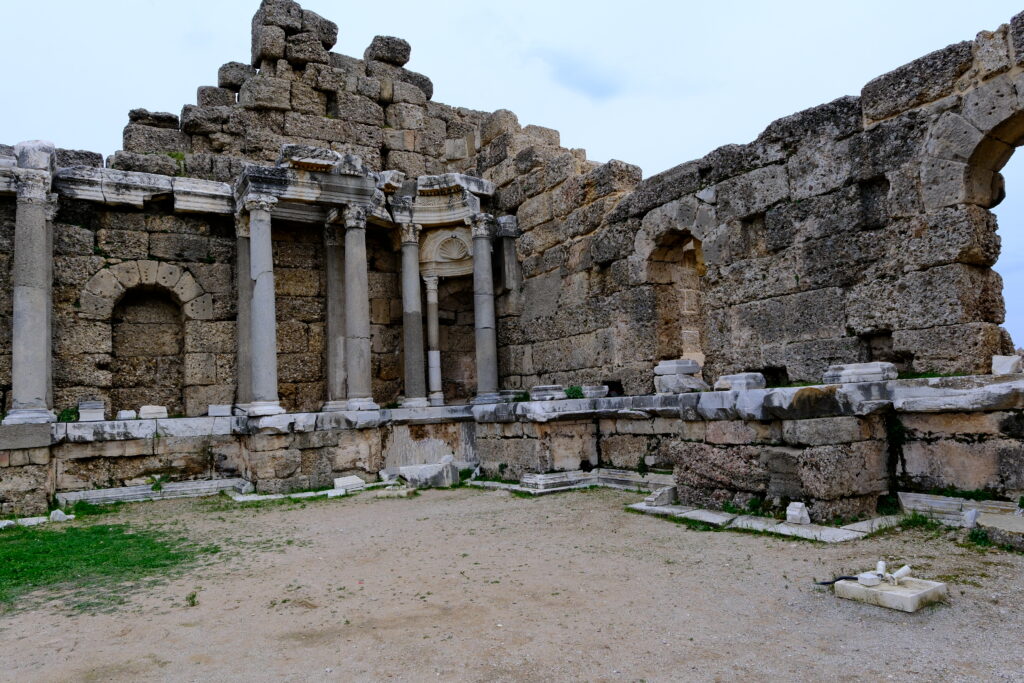
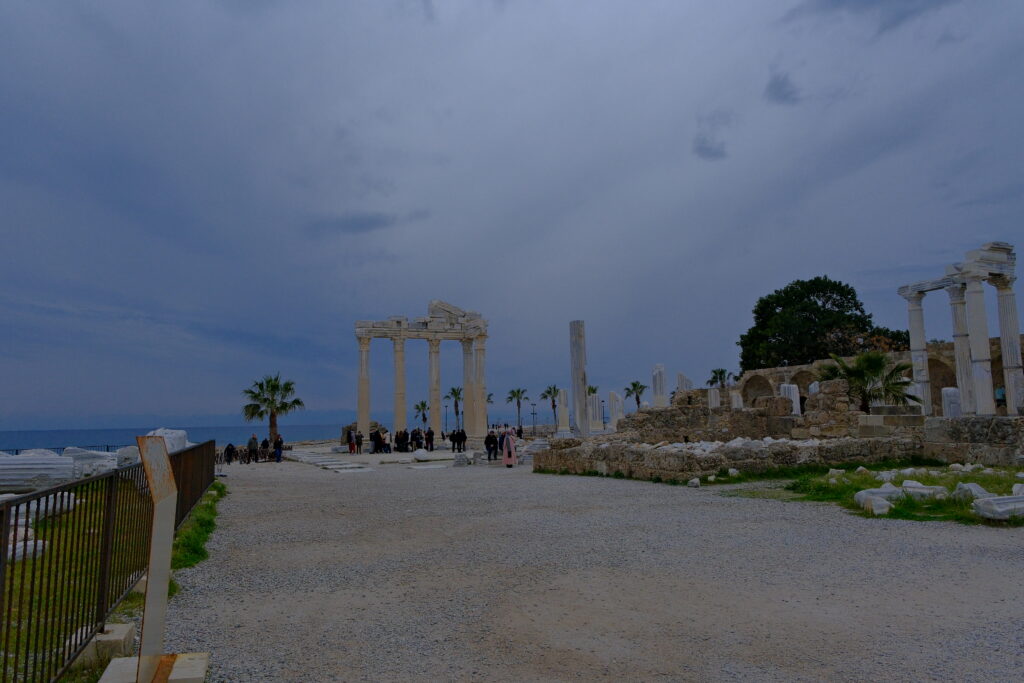
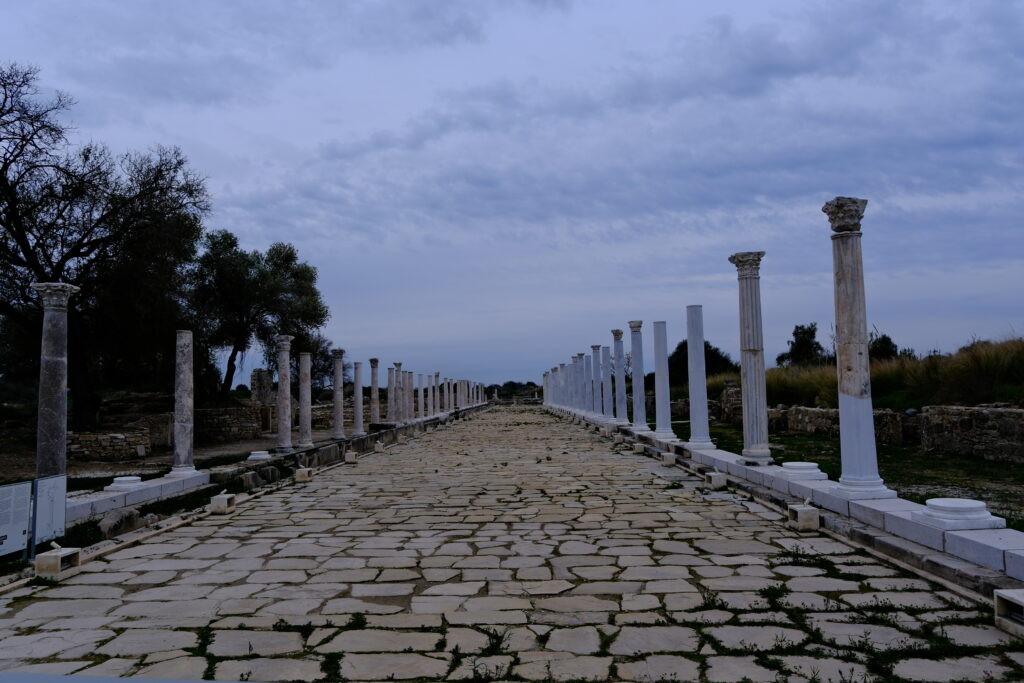
The theater, baths, colonnaded street, nymphaeum, agora, aqueducts, harbor area, Temple of Apollo, and Monument of Vespasian are all waiting for you inside. The Temple of Apollo, for example, the symbol of Side, was built around AD 150 during the Pax Romana, the Roman Peace. Ancient Side clearly received its share of Rome’s wealth and prosperity; it was, in every sense, a planned and systematic city.
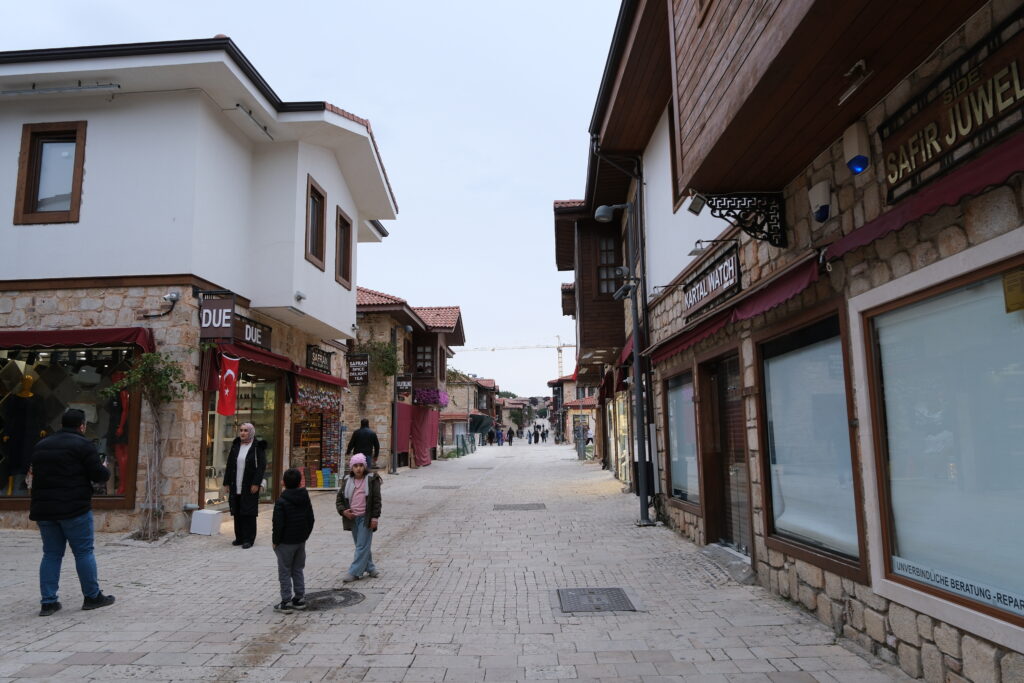
Ancient Side is also a touristic and social place, with restaurants, cafés, and small boutique shops within the site. On my most recent visit, what caught my attention was the extensive restoration work taking place. The theater and some other areas were closed to visitors. Four cranes and a large team were working intensively. Because of seasonal preparations, the Prof. Arif Müfid Mansel Museum was closed, but the other museum, where several sculptures and artifacts are displayed, was open. Both museums are located within the ancient city, though their entrances are separate. So once you are inside, make sure to visit both if possible.
Arif Müfid Mansel was one of Turkey’s earliest archaeologists and the scholar who initiated the excavations at Side in 1947. Prof. Dr. Jale İnan, who later directed the excavations after Mansel, was another invaluable figure who devoted great effort to Side. Jale İnan, Turkey’s first female archaeologist and one of the bright figures of the Republic, was Mansel’s assistant; they worked together in the excavations at Perge and Side.
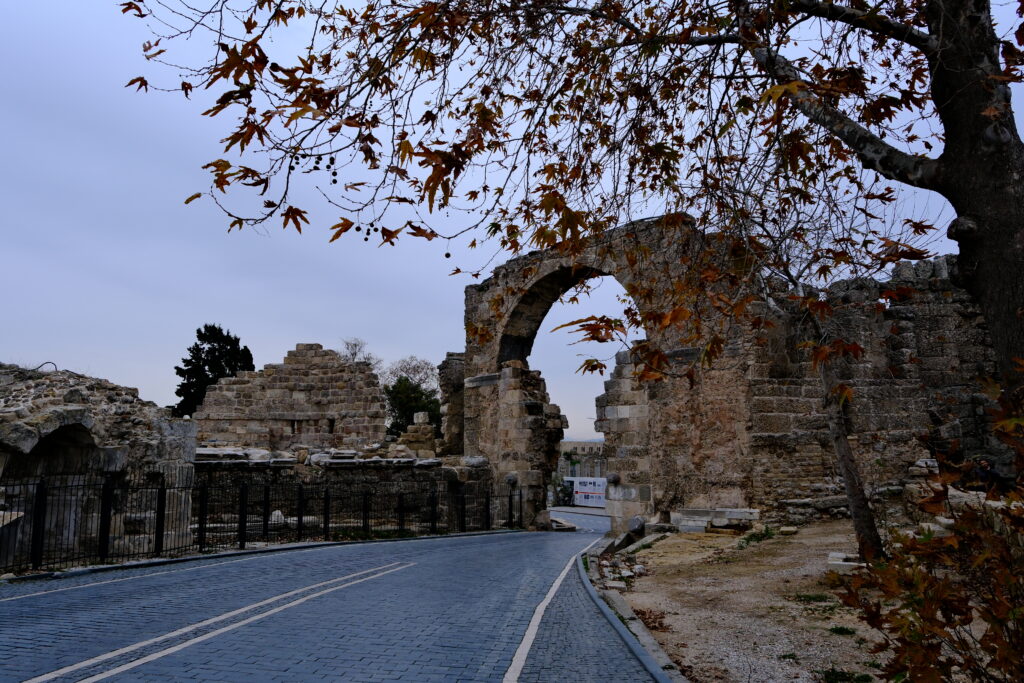
According to Prof. Ekrem Akurgal, the decline of the Roman Empire also affected Side. The city became poorer, and in the 4th century an inner wall was built through the middle of the settlement, reducing its area by half. In the 5th and 6th centuries, however, Side became an episcopal center and experienced a revival.
During my visit, I found myself thinking about how this ancient city has grown, survived, and become more beautiful over the years. There is no doubt that Side has played a major role in Manavgat’s development as a center of tourism and cultural heritage. Let’s keep visiting this beautiful place regularly, and I wish you an amazing time in here.
Photos: Author’s Archive