Arykanda is one of the ancient cities in Antalya where I feel at peace. Because of its location away from the main roads, it remains a calm and quiet Lycian city that does not receive too many visitors, even in summer. The ancient city is located near Arif village in the Finike district of Antalya, along the Finike-Elmalı road. From there, a side road climbs upward and takes you to Arykanda. The site is about a 30-35 minute drive away from the center of Finike, and you may come across small groups of European or American tourists visiting the city.
At the turnoff, there is a waterfall and a small local market. You can pause there, drink tea, and have something to eat. From the Arykanda waterfall, locally known as Aykırtça, you can fill your thermos with ice-cold spring water. If you are lucky, you may even meet the eyes of mountain goats or deer that come down to drink from the spring. There is no checkpoint at the entrance to the archaeological site, so the Museum Pass system is not yet active here. You can enter without paying a fee. Park your car and begin exploring right away.
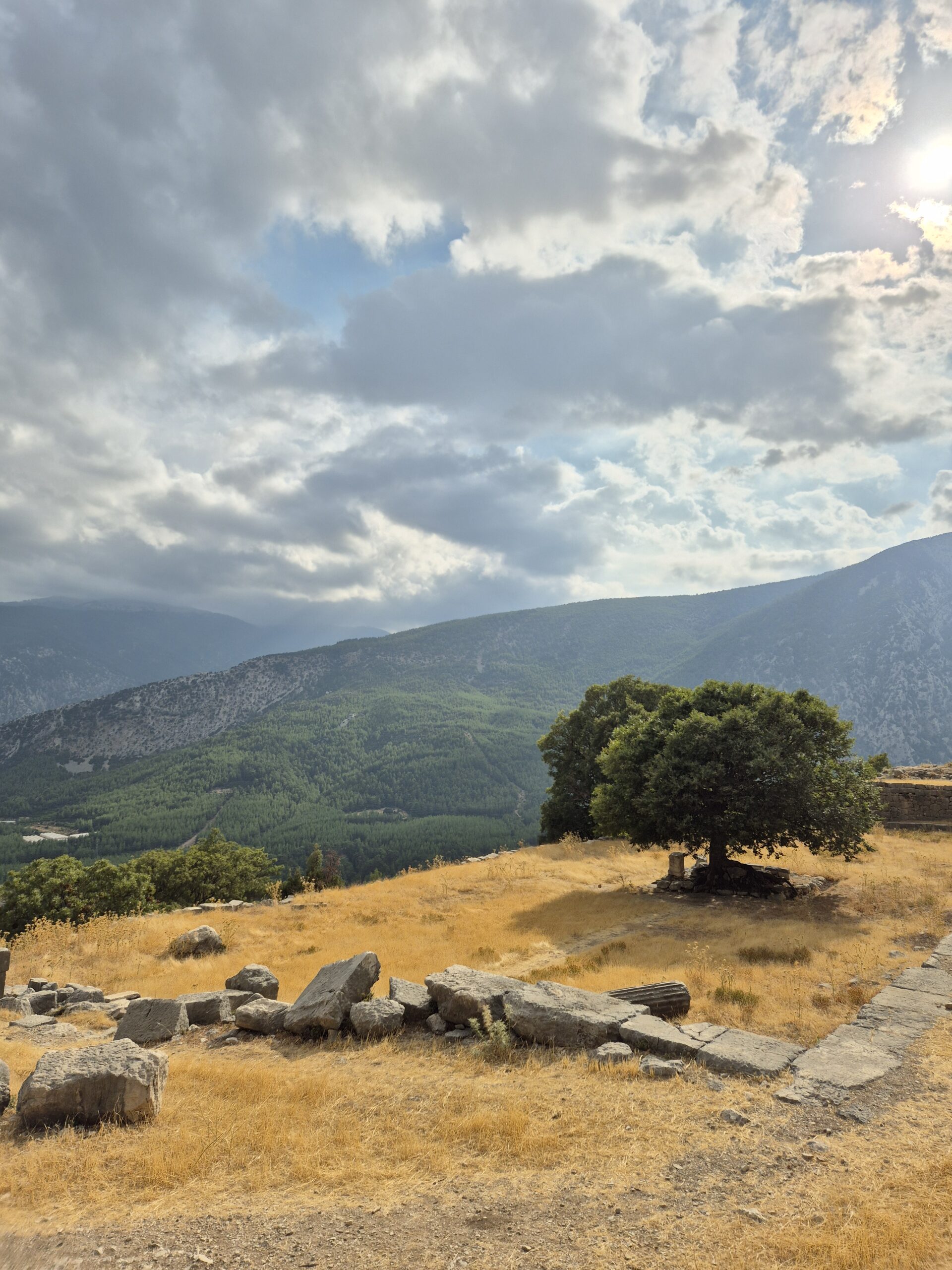
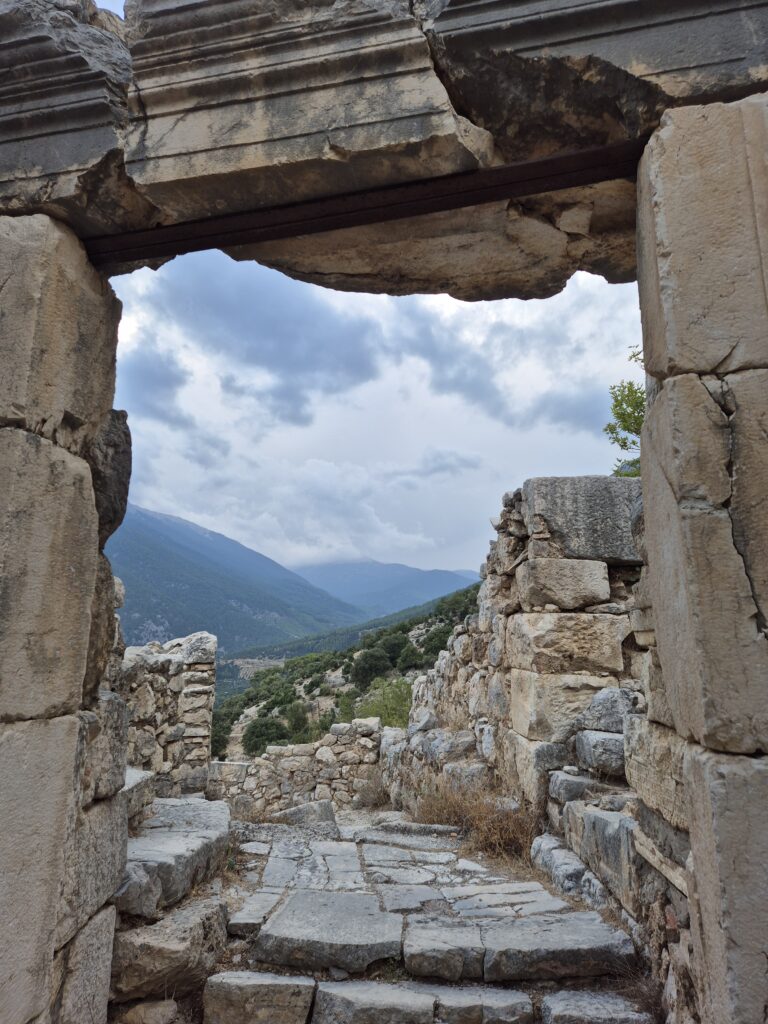
When coming to Arykanda, it is best to have sports or outdoor shoes, water in a thermos, and a hat with you. The city stands on a rocky slope known as Şahinkaya. It can be cold even in autumn and spring, and it is often windy. Şahinkaya lies on the southern slopes of the Bey Mountains, and Arykanda is located at an altitude of around 1,000 meters. The name Arykanda comes from the Luwian language: Ary-ka-wanda, meaning “the place at the edge of the steep, high rock.”
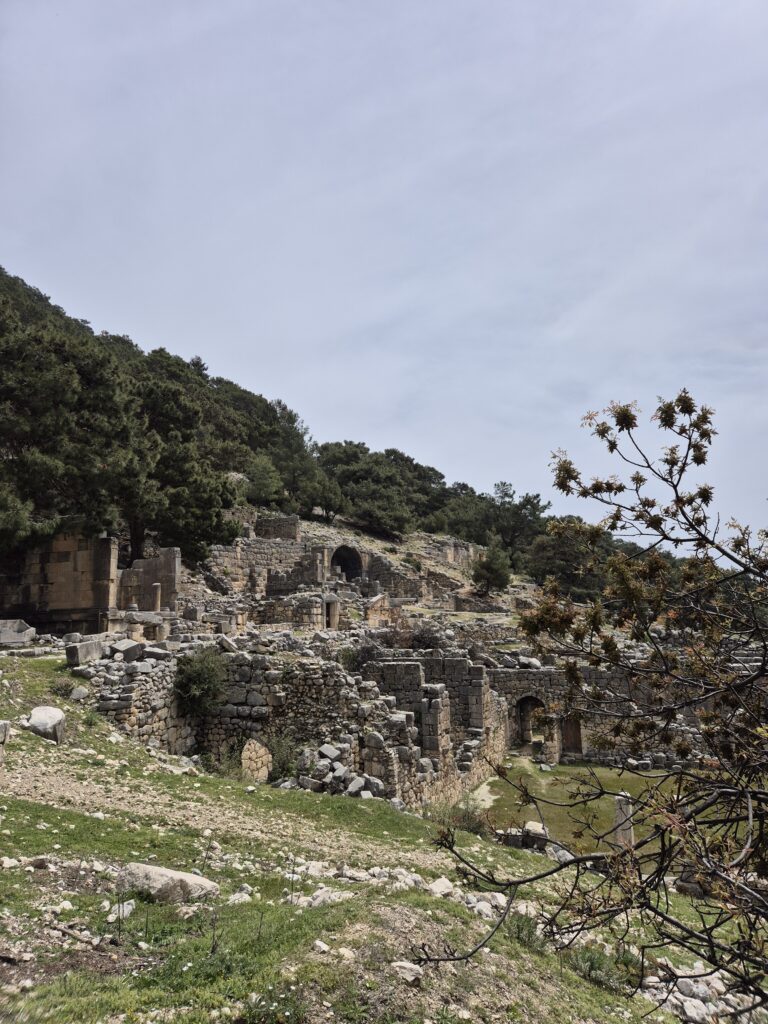
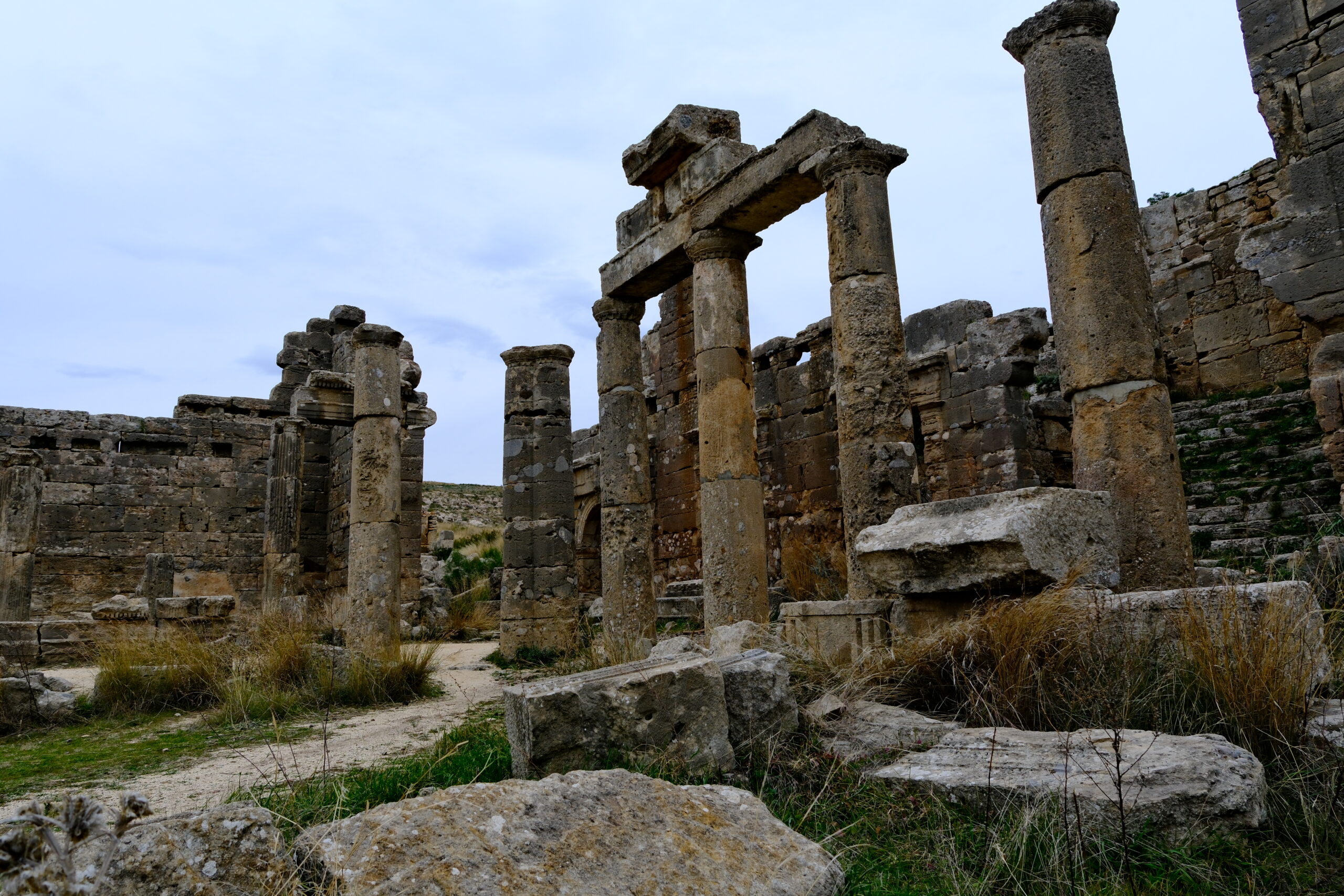
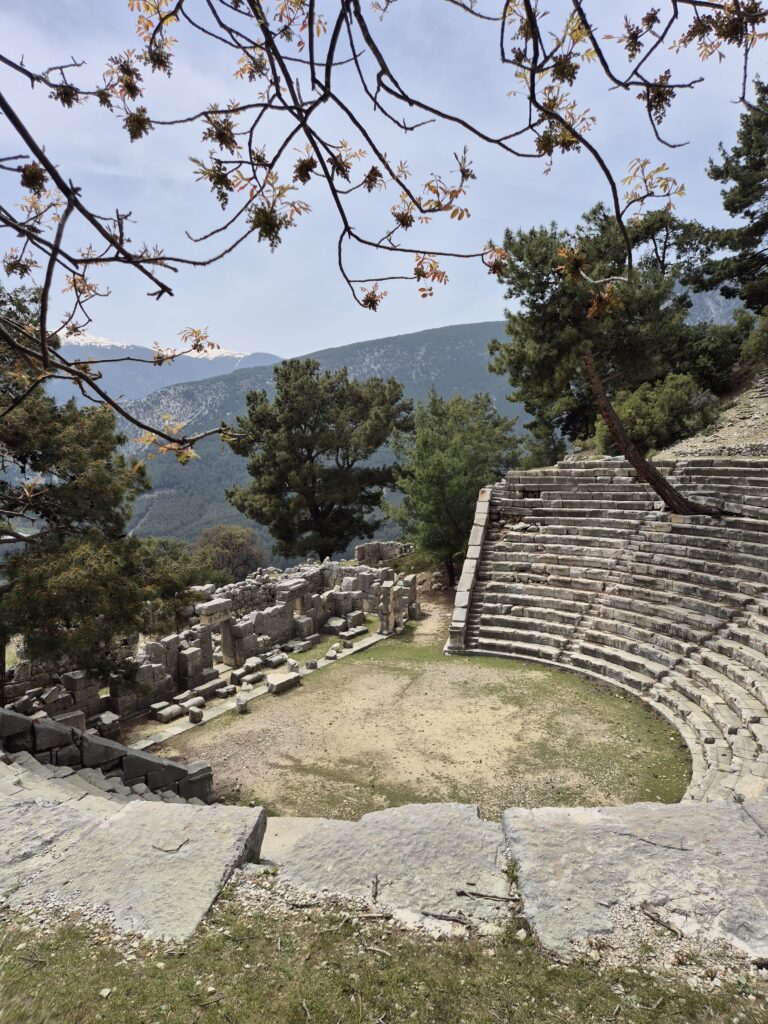
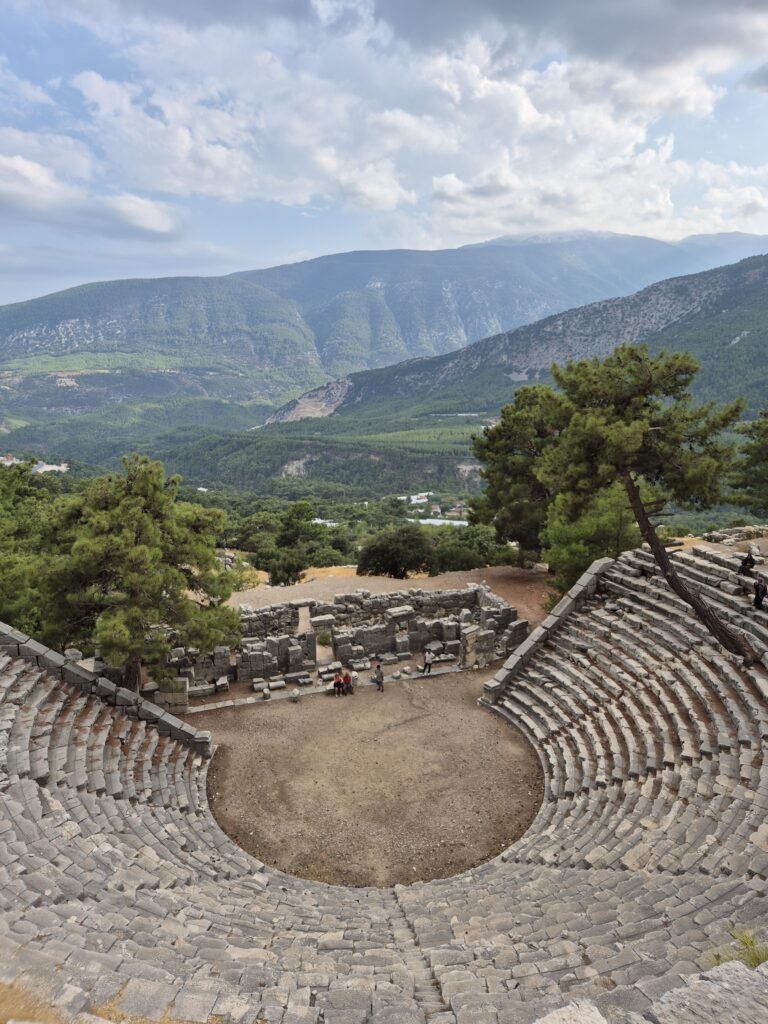
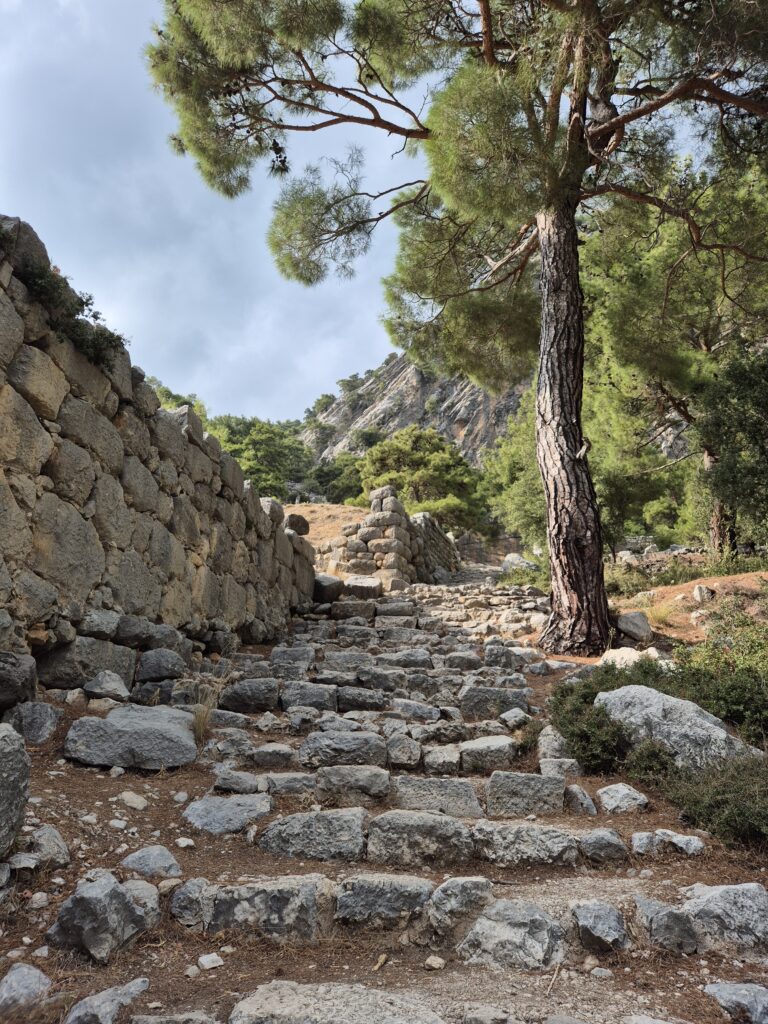
As you explore the city, you sometimes walk on relatively flat ground and sometimes along sloping paths. The Greek-style theater leaning against the hillside, for example, is a very special structure and has survived almost undamaged. Just behind the theater stands the stadion. To reach the theater and the stadion, you follow a path that climbs slightly upward. The stadion was the place where athletic competitions were held in Arykanda. It has a one-sided, three-stepped seating area.
Arykanda is a natural paradise, a city on a mountainside. As you walk here, be quiet and attentive. You will feel the wind and the whispers of a city that has endured for thousands of years. Seeing shy deer within your line of sight, cautious yet close enough to notice you, is a truly unique feeling.
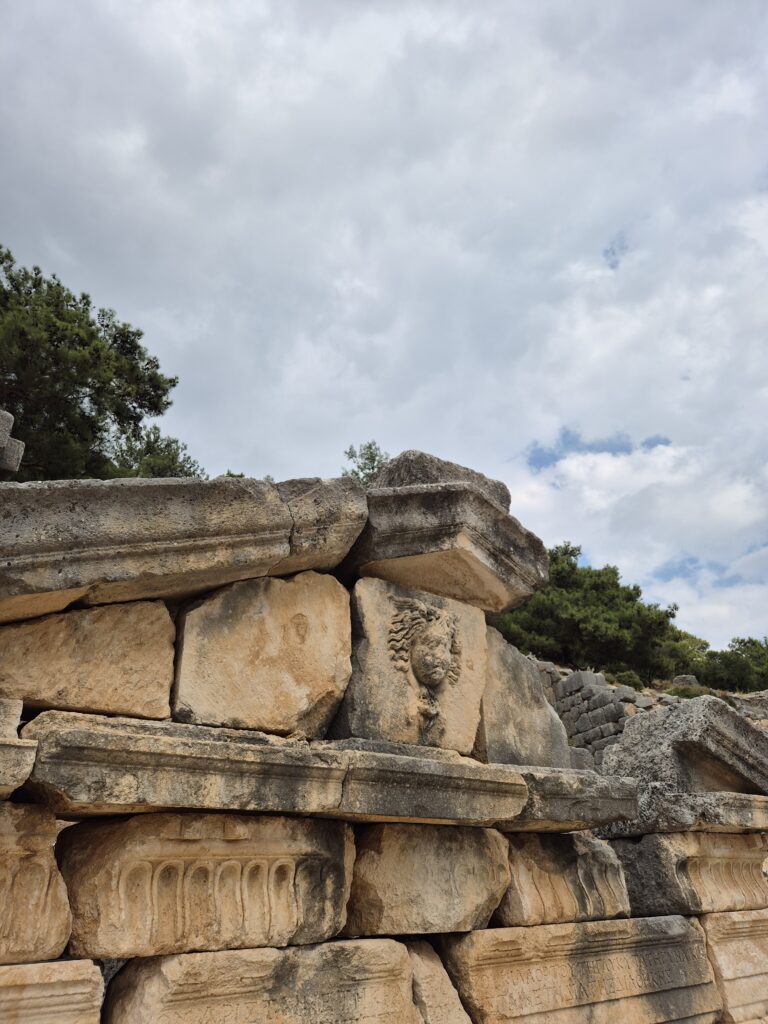
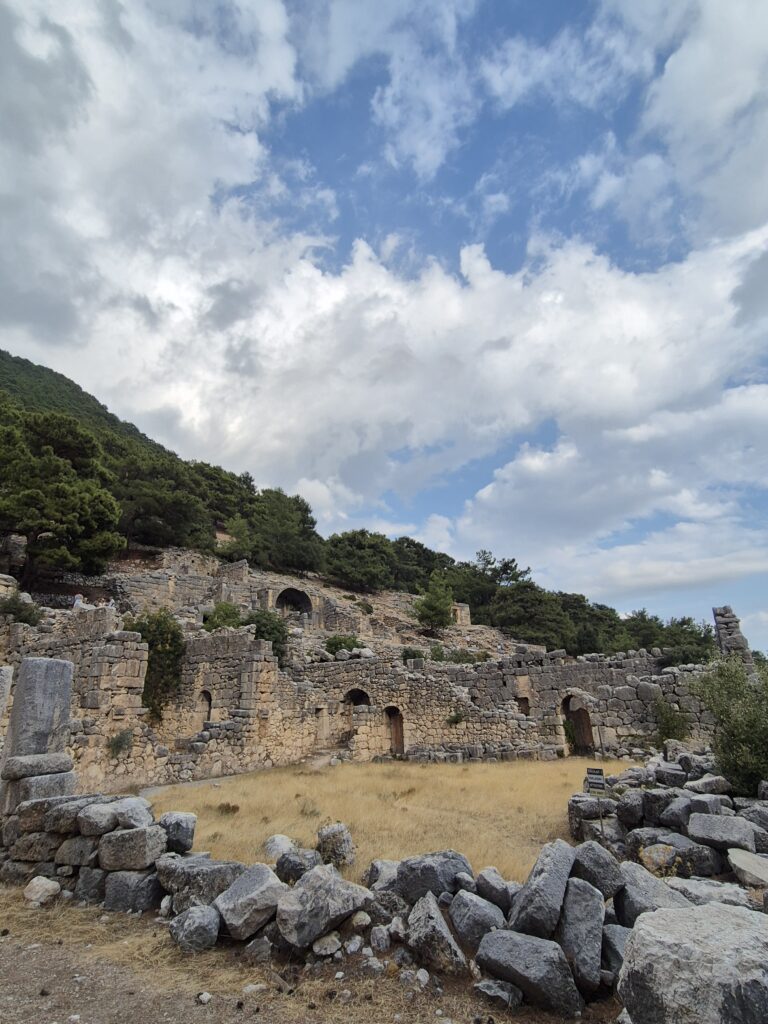
The city dates back earlier than the Hellenistic and Roman periods. Archaeological evidence points to settlement here as early as the 2000s BC. Still, it is fair to say that most of the structures standing today belong mainly to the Roman and Hellenistic periods. Arykanda experienced its golden age during the Roman period. In the 3rd century AD, it was damaged by a major earthquake and was later abandoned. Like many ancient cities in Anatolia, however, it continued to exist during the Byzantine period and lived on as an episcopal center.
The bath complex is a fully developed Roman bath and consists of three main sections. The Arykanda baths had a tepidarium (warm room), caldarium (hot room), and frigidarium (cold room). They were heated by the hypocaust system, the Roman engineering method of underfloor heating. In this system, hot air from the furnace circulated through hypocaust channels beneath the floors. We owe these advanced architectural and engineering skills to the Roman Empire. The bath complex also included a changing room and a sports area, the palaestra.
Excavations at Arykanda have been continuing for more than 55 years. The excavations were initiated in 1969 by Prof. Dr. Cevdet Bayburtluoğlu, who directed them for 35 years and helped bring Arykanda to light. Let us remember our late professor here with respect. For those interested, I recommend Cevdet Bayburtluoğlu’s books on Lycia and Arykanda. Bayburtluoğlu, who passed away in 2013, was among the “second generation” of archaeologists trained in Turkey after the generation of Ekrem Akurgal. He was a student of Akurgal and a specialist in Lycia. The two met in the 1950s during Ekrem Akurgal’s excavations at Phocaea.
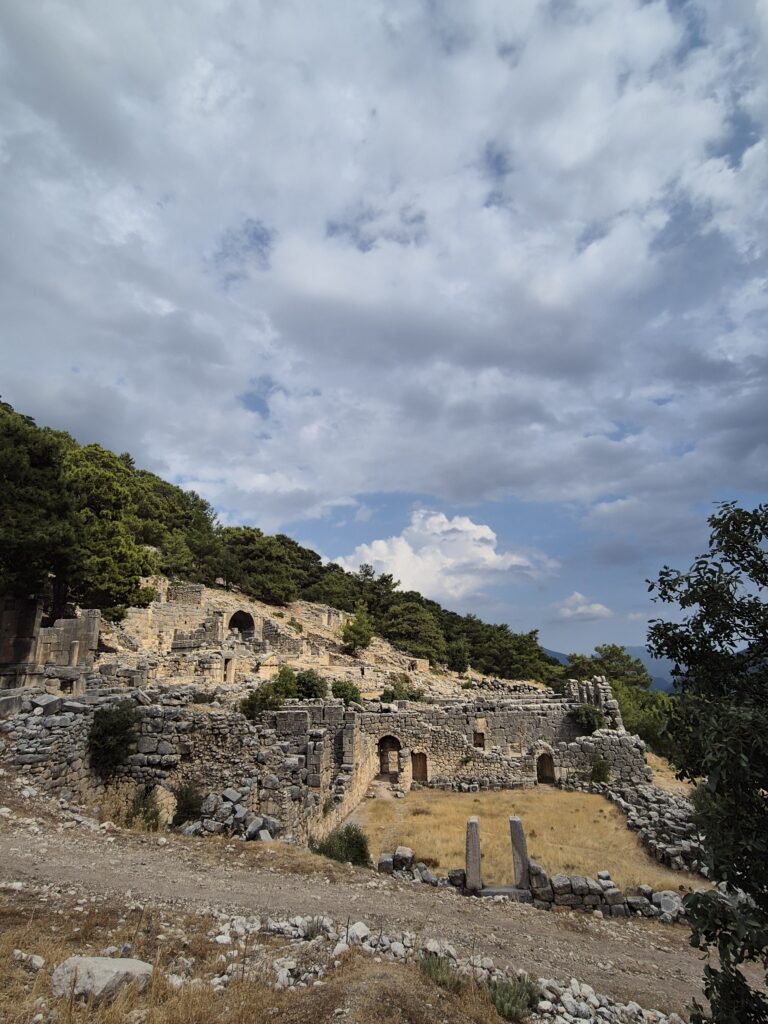
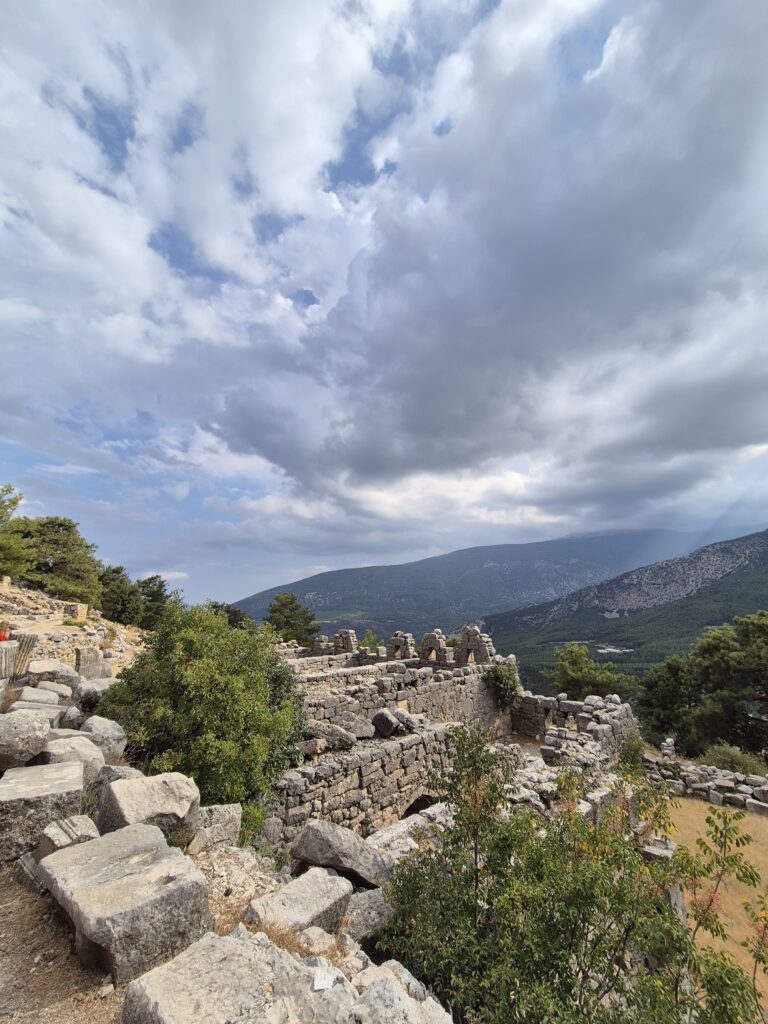
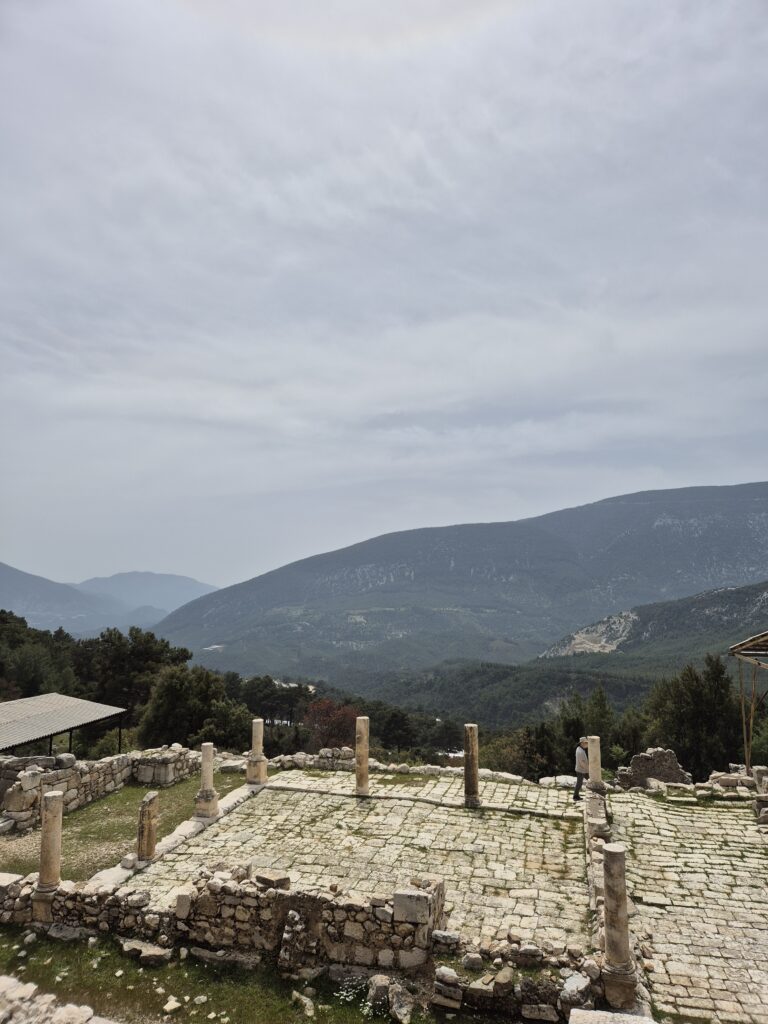
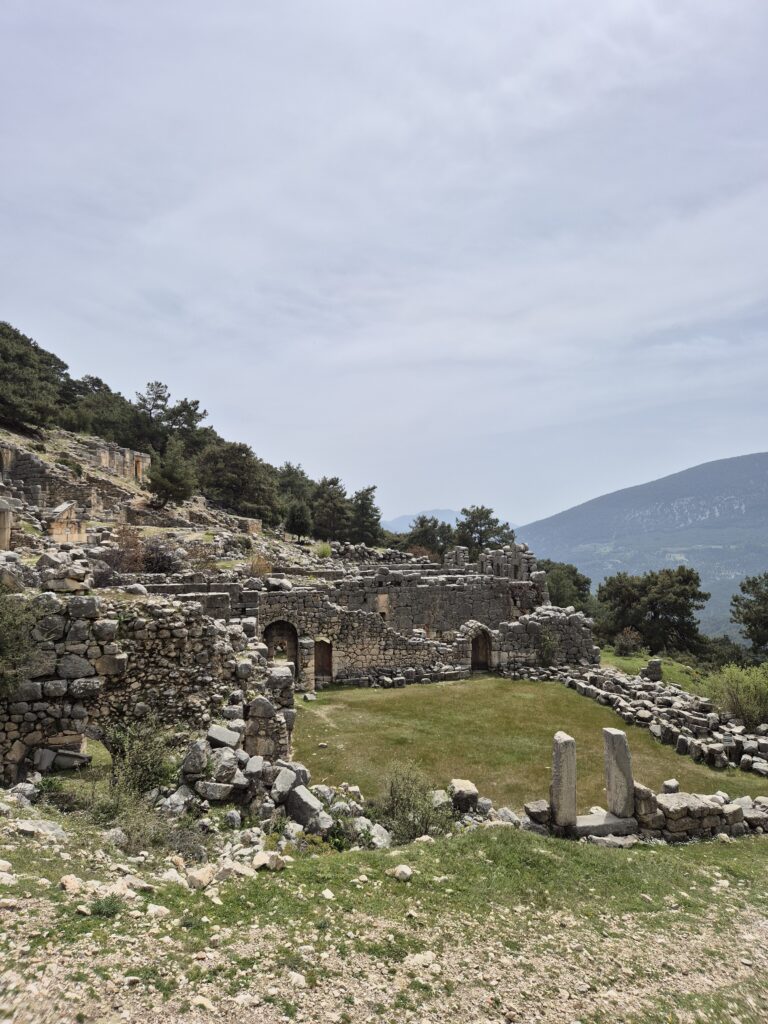
The theater, agora, stadion, bath areas, bouleuterion (council house), odeon, commercial shops, temple, Roman houses, and burial areas are among the places we can see today. In addition, near the entrance there is a section with mosaics where you can see floor mosaics. Beyond the archaeological remains of the city, you may also notice local shepherds grazing their animals and flocks moving through the landscape. Arykanda is still part of Arif village, where active rural life continues, and this feeling is one of the things that makes it unique.
If your route passes near Elmalı or Finike, or if you are traveling from Antalya to Kaş, make sure to stop at Arykanda. This ancient city is beautiful and amazing in every season. For a satisfying visit, 1-2 hours will be enough.
Stay with travel.
Photos: Author’s Archive